
The Artist’s Current Mindset
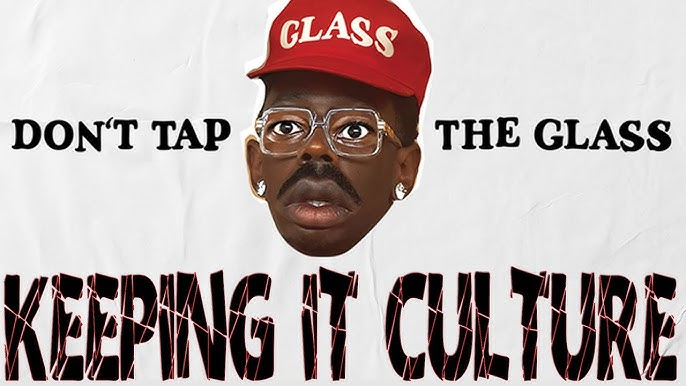
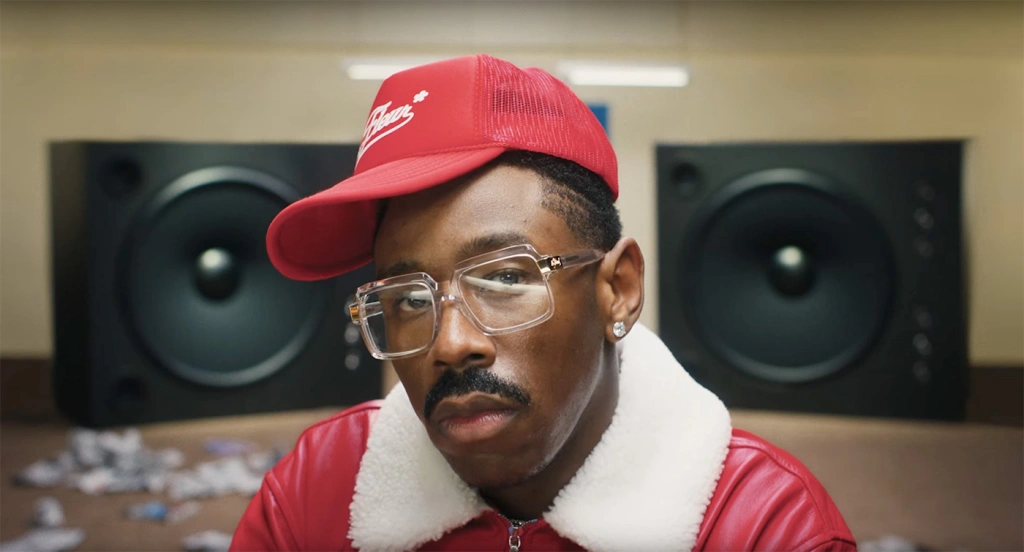
Notwithstanding that Tyler, The Creator has not invented a new style and instead returned to the same old, “DON’T TAP THE GLASS,” his album is incredibly catchy and fun. In addition, for an artist who, like Tyler, enjoys enormous public adulation and almost deification, fans will always have a problem with the new presentation of his work alone. Consequently, even though the gap between the album’s announcement and its actual release was incredibly short, this surprise project – combined with its notably straightforward presentation – immediately ignited a flurry of fan conspiracy theories and sky-high expectations, arriving as rapidly as the Hawthorne rapper layers his signature odes to oral pleasure.
Tyler’s manner of addressing the release is in perfect agreement with his style, and nothing seemed out of place in this case either. To put it briefly, what is the most important thing the artist wants to communicate, and which is already here? What is his current mood? The statement primarily indicates that he is absolutely self-assured; that, without any doubt, he is the untouchable king, and that all his success comes as a result of something he absolutely deserves.
A Dancefloor Mission
As a direct result of this supreme confidence, we received the most concise, unadorned, and boast-filled full-length project in Tyler’s entire catalog. The original songwriter, for the most part, made the album for the listener to have fun dancing away hot summer nights. The most common and likable song collection of “DON’T TAP THE GLASS” is a result of the album’s very pervasive and catchy songwriting. In the course of the optimal off for the energy-level tracks, the music itself changes through a vibrant mix of hip-hop rhythms, funky grooves, soulful melodies, and pumping dance beats. Whereas, the messages of Tyler are straightforward and to the point; his verses are still very crafty, though and could be well understood from the first listen, although they will not be easily penetrable as they are still thought-provoking and emotional.
So, how successfully does the album actually achieve its core goal of making people move? We will certainly strive to provide a thorough assessment. However, a significant qualification must be stated upfront: this reviewer has not yet had the opportunity to experience “DON’T TAP THE GLASS” in its ultimate intended environment – a crowded, pulsating dancefloor. Therefore, while we can analyze its components and immediate appeal, the definitive test of its dance mission awaits that crucial real-world setting.
Tyler’s Production Vision
Firstly, even without considering the album’s specific branding or messaging, Tyler, The Creator makes his core intention crystal clear: he wants you to move. Crucially, he handles every single aspect of the production himself. As a result, you can instantly recognize his signature touch, especially in the bold, rumbling basslines that strongly recall his deep admiration for The Neptunes and N.E.R.D., alongside the uniquely playful yet slightly threatening buzz of many synthesizers. Importantly, this production quality stands out as the album’s absolute strongest feature.
Furthermore, Tyler The Creator expertly weaves together tiny elements borrowed from a huge range of styles like hip-house, Miami bass, G-funk, synth funk, electro, and dance pop. Consequently, despite having a shorter tracklist and a generally more direct feel than some previous works, this vibrant musical landscape flows incredibly smoothly. A key reason for this cohesive energy is the dynamic percussion, which powerfully blends influences from volt, crunk, classic West Coast hip-hop, and neo-soul to keep the momentum constantly high.
Textured Sound Details
Additionally, numerous small but impactful production choices add rich layers to the main instrumentals and song structures. On one hand, the vocoder’s striking robot-like distortion in “Sucka Free” is a special sound feature, and the pounding, grating kick drum underneath is the backbone of the increasing synthesizer-filled trip of “Sugar On My Tongue” of which the throwaway, loose feel is the essence.
Through the sound, the vocals are not just mixed well with a full sound, it is a bit sloppy, the main idea of the song is still successfully achieved, and this is packed with great energetic elements – it is just forefront and it is through its overbearing attitude that it delivers the message. Significantly, a major factor propelling the music forward is how the instrumental layers cleverly appear and disappear throughout the tracks. Ultimately, even though there’s often a huge amount happening sonically, Tyler ensures that listeners feeling overwhelmed always have a strong, solid melody to grab onto and follow from start to finish.
Clear Hip-Hop Homages
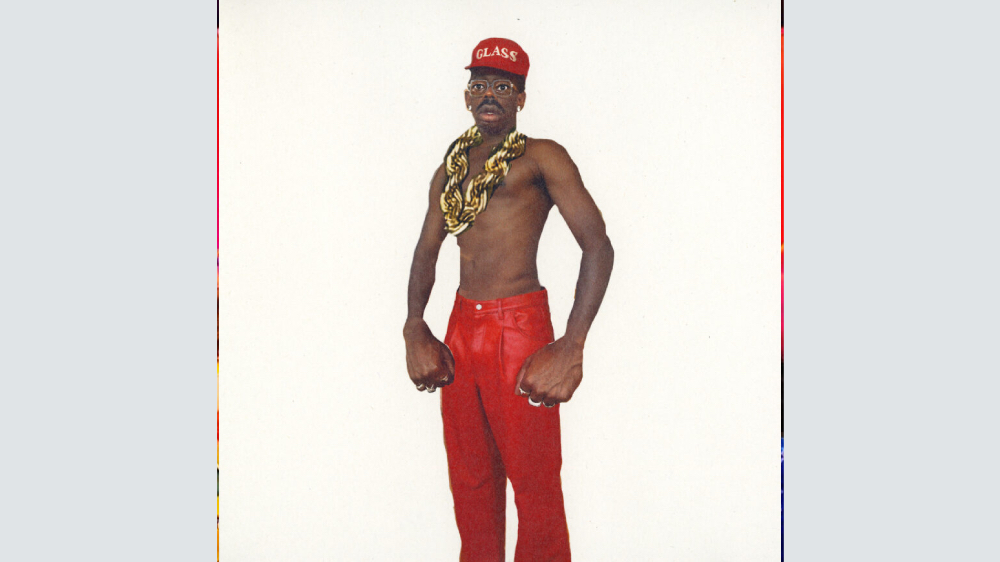
Moreover, Tyler, The Creator directly stated that he is truly passionate about the history of hip-hop culture, through various explicit references to the major tracks, including his work. He specifies that the song “I’ll Take Care of You” has a superbly elated reuse of the drums featured in his “CHERRY BOMB” track. What is more, the song refreshingly mixes the original racy verses by Killa C, Princess, and Lil Scrappy taken from Crime Mob’s hit anthemic “Knuck If You Buck.”
On top of this, fans will discover a clear allusion to The Black Eyed Peas, an obligatory excerpt of the legend Busta Rhymes with Pharrell Williams on “Big Poe,” as well as a show of respect to other influential figures like Tommy Wright III, Too $hort, Kelis, and 12 Gauge. These various deliveries of references are substantial in the album’s theme that smartly recalls the music coming from the 1980s and lasting through the 2000s era. Consequently, this wide variety of styles and the sheer boldness of the production never lose their infectious energy or impact.
Tyler’s Vocal Delivery
Moving on to Tyler, The Creator’s actual rapping and singing across “DON’T TAP THE GLASS,” his vocal approach presents a fascinating study. His most remarkable change can be observed from the fact that he has more of a Los Angeles accent in his verses than he has ever had before. This obvious stylistic choice therefore reinforces and builds on the many musical references he makes to older generations of rappers and producers that are interwoven in the album. Also, there are certain spots where Tyler intentionally moves out of the way, giving the instrumental part an opportunity to shine; “The Prime Example” Don’t You Worry Baby” is most indicative of this change as it features Madison McFerrin, where his role becomes less pronounced.
Even in the absence of a leading position, Tyler’s individuality is permanently visible. Besides, his rapping patterns are also suitable for a wide audience, simple to understand but all the time jazzed up by either witty, amusing lines or surpassingly explicit statements. Of course, some of these lyrical snippets come across as funny and over the top on purpose, but to be honest, the admirers would be strange if they did not anticipate this kind of performance from someone who has so much to be proud of in the industry, at the end of the day.
Showcasing Vocal Range
The album also includes a number of great melodic sections that well represent Tyler’s vocal talent in his usual voice range. In particular, the song “Ring Ring Ring” turns out to be a very mellow and successful one, mainly because of his low-energy and more careful voice matching the sound of the song that is conducted gracefully and pleasantly. In the meantime, the high-spirited and catchy rawness of the last track, “Tell Me What It Is,” describes a contrary scenario where the intense instrumental music unfortunately clashes a little with the vocal style he uses on this song.
Importantly, at 34 years old, Tyler The Creator isn’t necessarily revealing a brand new vocal skill set he’s mastered here. Instead, his primary vocal goal across the entire album seems focused on confidently proving, beyond any doubt, that he truly possesses the talent and charisma to be considered a leading figure – reinforcing the central message that he really is “that guy” right now.
Lyrical Tone Shift
Furthermore, although one or two lovelorn resources still exist in the lyrics, the dominant tone that Tyler had conveyed in the song was, in fact, full of authority, calmness, and comfort. This album lacks a common thread or a strong topic that can serve as the background for all other elements, and therefore, the moments of arrogance that looked as mere sparks before now appear to be even more massive than that, appearing very much like the spotlights. Consequently, this intense focus on self-belief can sometimes make the actual lyrical content on “DON’T TAP THE GLASS” seem relatively unimportant or light. Nevertheless, this very absence of a complex narrative thread also serves a key purpose: it actively keeps your attention directed exactly where Tyler intends it – firmly on the physical experience of dancing that the entire album is designed to inspire.
Album’s Musical Callbacks
Meanwhile, Tyler The Creator successfully accomplishes his core mission by deliberately revisiting familiar musical ideas from his past and skillfully injecting them with fresh energy. More specifically, the vibrant pop-rap-dance mashups that are scattered throughout this project are like a direct and grown start of the sound he started on the track “I THINK.”
Furthermore, the way he introduces the gritty, raw, and abrasive textures, which are complete throwbacks to his “CHERRY BOMB” era, is the sharpest contrast that adds an extreme zeal that cuts through the production that is otherwise mainstream and, at the same time, sugary; that is to say, the gritty abrasive texture may be the most breathtakingly creative composition of the album. It also functions as a last ending dose of high energy before the project moves down to its more calm conclusion even if the two-part track “Don’t Tap That Glass / Tweakin'” is less resonant than some of his other works in this format.
Seamless Track Transitions
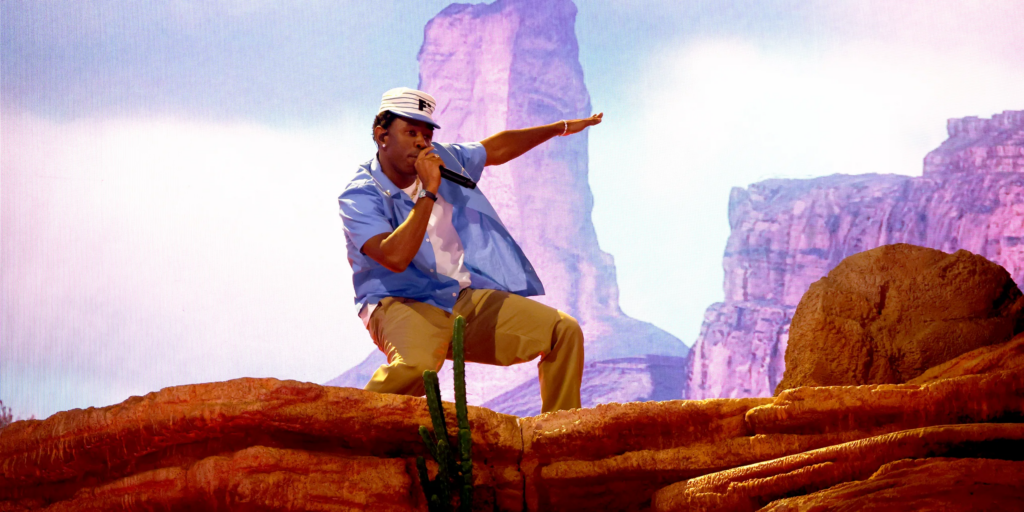
The album’s strength is in the sequence order, where the transition from one song to the next is carefully picked to give a good impression. One of the best illustrations of this is how the ominous nature of “Mommanem” grows slowly and then rapidly turns into madness, the song “Stop Playing With Me,” becoming the most compelling and thrilling switch in one of Tyler’s more recent works. In the end, there are no elements sticking out; all parts in “DON’T TAP THE GLASS” fit together very well. Importantly, with its concise runtime and focused intent, the album leaves absolutely no space for any filler tracks, ensuring a consistently engaging listen from start to finish.
Familiar Elements Revisited
However, the very act of Tyler, The Creator building bridges between different points within his extensive catalog definitely involves that some of his recognizable and time-proven musical elements get to be somewhat overused here compared to his prior releases. Besides, as the majority of Tyler’s artistic personality is based on the making of whole thematic pieces, this particular album’s apparently very leisurely and indifferent nature does not provide many insights(by itself) on his artistic message or the ideas. Therefore, the various musical styles interlaced in the album are quite upfront, direct, and explicit, and certain stylistic cliches attributed to the sounds he employs also appear to be much more obvious than earlier.
This particular excerpt not only doesn’t actually reflect negatively on the quality of the music; it also talks significantly about Tyler’s current very high status, as a musician who has achieved great success and is extremely influential, and that feedback is related to his huge and popular artist operating career at its highest point.
Although just telling the listeners to accept the album “as it is” may in some instances be considered a way to avoid penetrating criticism, still, “DON’T TAP THE GLASS” does not at all miss that simple way, and it is its artistic free of pride and pretend or stressed complexity that earn it an easy-to-understand approach. Moreover, the album’s intentionally brief duration turns out to be its greatest advantage, as it absolutely never overstays its welcome. Rather than feeling too brief, this concise length powerfully emphasizes the project’s immense replay value even more effectively than on any other album Tyler has released under the Creator moniker.
Immediate Impact & Future Promise
Moreover, the very little time that “DON’T TAP THE GLASS” has been out to the public would prove to be a more realistic indication of whether the groove-centric vision of Tyler, The Creator will be favorably accepted and eventually loved by the public over the next few months and even years. Nevertheless, a vibe that is both instantly catchy and truly engaging and appealing to the audience looms as the most exciting feature that we are currently endowed with. Furthermore, this project feels uniquely close to representing a singular, foundational blueprint that Tyler could potentially build upon for future work; it distills his core sound effectively. Crucially, he clearly possesses an unparalleled understanding of his own musical trademarks, far exceeding anyone else’s grasp.
Therefore, we strongly doubt that this exercise in revisiting past ideas will stagnate his creativity in any meaningful way moving forward. Ultimately, even though the album often feels like a vibrant parade celebrating nostalgic sounds, Tyler The Creator conclusively proved once again through “DON’T TAP THE GLASS” that his exceptional craftsmanship and production skills will consistently yield musically rich and satisfying results, regardless of the specific direction he chooses.