
The Perplexing Problem of Forgotten Favorites
Many experienced music reviewers face a curious situation with certain artists. Most times they really like the songs, sometimes they even establish a very strong positive connection with some albums or songs. Nevertheless, in spite of this admiration, the artist’s work seems to fade away in their thoughts. Consequently, the music fails to get properly stored in their personal mental archive of sounds and feelings. Therefore, if someone mentions that artist later, the reviewer cannot instantly recall the distinct sonic qualities, lyrical themes, or overall energy associated with them. Ultimately, it feels remarkably similar to having a very specific, localized form of amnesia whenever that particular artist comes up.
Unexpected Moments of Musical Clarity
Sometimes, this frustrating mental block suddenly vanishes when an unexpected point of access appears, usually quite randomly and spontaneously. For instance, personally, Depeche Mode’s music remained elusive for me over many years. Then, one day, during yet another listen to their album “Violator,” a deep contextual understanding finally emerged and clicked solidly into place. This experience strongly resembles those moments when perfect lighting suddenly illuminates a familiar scene for the very first time. As a result, you clearly perceive something that has actually been present right in front of you all along, leading to that wonderful feeling of discovery, a true eureka moment regarding the music.
Perfume Genius: A Puzzle Finally Solved
Similarly, I experienced this phenomenon with the artist Perfume Genius across several years, even though I had sincerely appreciated every project he released starting from 2014’s “Too Bright.” Interestingly, it was actually his 2022 release, “Ugly Season” – a somewhat unusual entry within his overall body of work – that finally illuminated Mike Hadreas’s core artistic inclinations for me. Moreover, this album sharply revealed the impressive breadth and inherent tension within his deeply Romantic sensibilities. Following this breakthrough, my entire relationship with his discography, including his recent album “Glory,” transformed significantly. Consequently, his songs and albums now firmly land within the correct mental files, complete with links connecting them to other related artistic memories – that mysterious chain of recollection. Finally, they feel ready and waiting to be fully explored whenever needed.
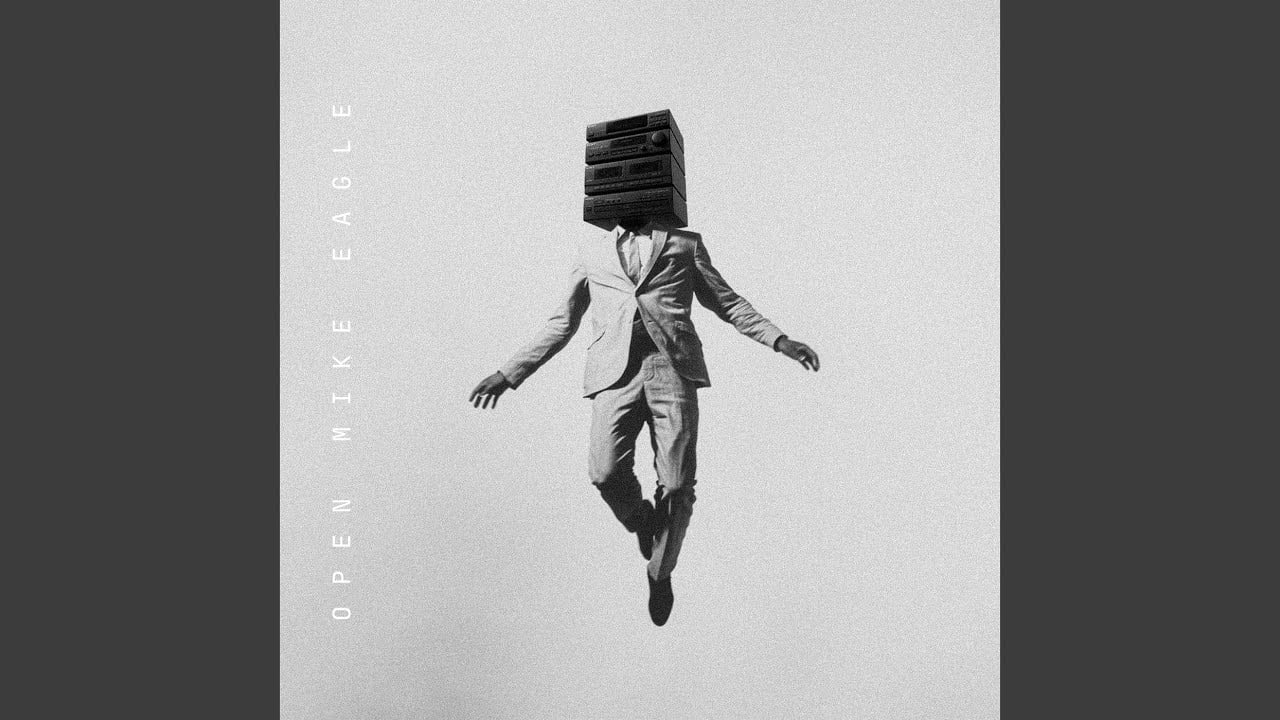
The Persistent Puzzle of Open Mike Eagle
Similarly, Open Mike Eagle stands out as another artist whose work consistently slipped through my mental grasp, despite genuine admiration. When his album Dark Comedy first appeared back in 2014, I remember playing it three times consecutively, completely absorbed. Frankly, the deep self-reflection, the unique blend of contrasting sounds, his careful sharing of personal truths mixed with a quiet confidence – it all truly resonated with me. Without a doubt, the album felt like a significant moment in hip hop history. However, somehow, I just couldn’t quite capture the complete essence or overall feeling of the record, either emotionally or artistically.
Each listen ended the same way: as the final track “Big Pretty Bridges” faded out, I recognized that only a hazy sensation remained. Specifically, I sensed Eagle was carefully exploring past painful experiences, showing both deep affection and a certain wariness towards the places, neighborhoods, and people from his youth. Since nearly everyone has mixed feelings about their roots, this theme was undeniably powerful and well conveyed. Yet, even so, I consistently failed to hold onto the specific angle, the distinctive energy, or the subtle underlying style of his vocal delivery.
Brick Body Kids: Sharpening Focus Through Humor
Moving forward to 2017, Brick Body Kids Still Daydream showcased Eagle delving even deeper into his talent for character sketches. Importantly, this album highlighted his refined ability to examine the past, including difficult memories, using a lens of subtle comedy. In fact, humor becomes a clear and consistent thread running through Eagle’s music, at least starting from Brick Body Kids, representing an understanding that tragedy, even personal tragedy, ultimately possesses an impersonal quality. Meanwhile, arriving in 2020, Anime, Trauma and Divorce served as Eagle’s synthesis album, the project where his natural inclination for clever jokes and expressing sorrow truly blossomed fully.
Consequently, his lyrics gained remarkable precision, his characters felt fully developed and real, and his storytelling flowed seamlessly. Furthermore, his stories began to connect with the common, universal struggles and growth that classic stories from all times also depict. Although I felt really touched and impressed with both the latter albums, I still found it difficult to understand the music after listening to it; it felt like trying to grasp a branch in the middle of a fast-moving river.
Anime, Trauma and Divorce: Mastery Without Memorability
This elusive feeling persisted significantly with his 2020 release, Anime, Trauma and Divorce, even as it clearly represented a peak in Eagle’s artistic synthesis. Within this project, his signature blend of witty observations and raw emotional release truly reached its fullest potential. As a result, his wordplay became exceptionally sharp, the characters he portrayed felt vividly real and dimensional, and his overall storytelling achieved a remarkable smoothness. Moreover, his narratives started connecting powerfully to fundamental human conflicts and transformative experiences found in timeless dramatic works.
Nevertheless, the main paradox still existed: with a deep appreciation for the artistry and emotional impact of both Brick Body Kids Still Daydream and Anime, Trauma, and Divorce, I continuously found that after listening to these albums I felt somewhat lost as I couldn’t really remember any specific concrete connections that I made with the works for a long time. It really was akin to feeling the might and profundity of the river you are in, yet not being able to find a branch to hold on to that would steady you amidst the upside-down flow.
Rich Portraits Return
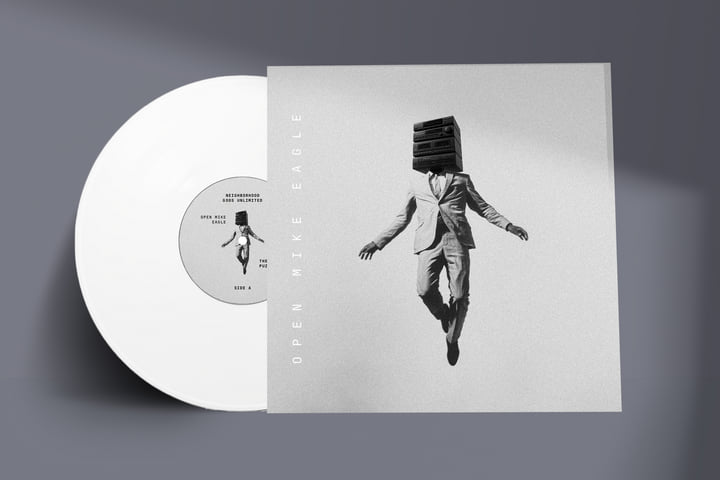
Once again, with his latest album Neighborhood Gods Unlimited, Open Mike Eagle generously provides listeners with deeply layered character studies, compelling stories, personal admissions, bold statements, and insightful observations about society’s underlying issues. For example, the track “me and aquil stealing stuff from work” starts out feeling incredibly ordinary, focusing on a common workplace transgression. However, it soon builds powerfully into something much larger, transforming into a compelling origin story or coming-of-age tale.
Throughout this song, Eagle and his featured guest Mr. Aquil vividly capture how young people often feel intensely drawn to symbols of wealth and status, like expensive “Mephisto” shoes. Subsequently, they also portray the profound sense of letdown that frequently follows actually obtaining those desired items, alongside the harsh realization of capitalism’s exploitative nature; this feeling is perfectly crystallized in the pointed lyrics: “Like how the hell I work and be still broke? / Mephisto? Ain’t that short for Mephistopheles?”. Furthermore, Child Actor’s production beautifully complements this thematic journey, creating a distinctly woozy and surreal atmosphere; ultimately, this sound design makes the listener feel almost physically unstable, as if standing precariously on a rickety scaffold that might suddenly collapse at any second.
Phone Panic and Profound Truth
Similarly, the song “ok but I’m the phone screen” begins by describing another very pedestrian event: the common frustration and fear of misplacing your phone. Eagle navigates thoughts and sensations that nearly everyone can instantly recognize (“Did I drop it in the road? It’s looking like it, no? / Maybe never had it, like I left the thing at home”). But then, he quickly elevates this simple scenario into a much broader, insightful commentary on the modern sensation of losing control. Indeed, there’s truly nothing quite like the intense wave of panic that instantly surges through you when you suddenly believe your phone is lost – this represents a uniquely contemporary jolt of terror that directly evokes a distinctly modern feeling of being disconnected and vulnerable.
And yet, interestingly, the core agitation and anxiety Eagle describes within this experience feel fundamentally timeless, deeply ingrained as part of our basic human hardwiring. Consequently, through songs like these across Neighborhood Gods Unlimited, Eagle skillfully navigates a fascinating and complex line, constantly moving between the epic scale of universal human struggles and the intimate details of personal diary entries, while also balancing grand, archetypal themes against seemingly trivial, everyday occurrences.
Blending the Big and Small
This unique approach defines much of Neighborhood Gods Unlimited, where Eagle consistently finds profound meaning within the fabric of ordinary life. Starting with relatable incidents like youthful theft or misplacing a phone, he masterfully expands these moments into resonant explorations of larger societal forces and enduring human emotions. The song “ok but I’m the phone screen” is the main point that the artist severely re-interprets a common situation whereby we lose our minds due to our dependency on technology, that is the fear of total disconnection from the digital world.
Indeed, the horror of a lost phone, albeit a very contemporary concern, still very much links to the loss of control and being suddenly helpless, anxieties humans have always faced. As a result, in this record, Eagle shows the ability to seamlessly combine the grand, nearly legendary range of common human experiences with the small, specific, and often mundane daily personal stories, thus effectively closing the gap between what becomes at the core of the human condition and what at first glance might appear insignificant.
Comparing Musical Perspectives
Neighborhood Gods Unlimited is a transfixing album that, quite regularly, conveys the impression of being the ‘in-between’ world of Vince Staples’ gloomy-shaded Dark Times and the more verbose, poetical side of Billy Woods’ Golliwog. Adding more to that, on his album, Vince Staples presents himself as the furthest thing from the center – an alien in a place that he does not understand, struggling to make sense of his current situation, but still finding himself very much out of touch with his former hood, not only in terms of location but also emotionally. In contrast, Open Mike Eagle’s deep dives into his own history carry a noticeable sense of distance; it feels more like he’s thoughtfully constructing a biography rather than directly sharing his own life story – think carefully shaped “bio-fiction” instead of raw “auto-fiction.”
Additionally, while Staples’ delivery throughout Dark Times pulses with urgency and carries a heavy, burdensome tone, Eagle frequently projects a distinct calmness, almost as if he has already worked through and resolved the complex issues he’s exploring. Ultimately, Staples reaches for confessional honesty because he feels an intense emotional need to express himself, whereas Eagle approaches personal revelation more as a deliberate artistic choice.
Woods’ Language-First Approach
Meanwhile, Billy Woods operates from a fundamentally different starting point, being intensely language-driven and acting primarily as a dedicated student of poetic structure and the power of individual lines. Now, this isn’t to say Open Mike Eagle lacks skill with words; he absolutely crafts thoughtful verses, clearly demonstrated by the evocative imagery in lines like, “I bought some pieces of a human heart / Three-fifths of mine had been euthanized” taken from “Michigan J. wonder.” However, Eagle’s core approach remains rooted more firmly in natural, everyday speech patterns and colloquial expression, even though he consistently infuses it with a definite poetic sensibility.
This accessible yet artistic blend shines through in another line from the same song: “I play the same game musically / I want some big, chunky, gold orangutan jewelry.” As a result, when Woods carefully shapes his language to achieve his maximum literary effect, Eagle chooses to stick to an honest, relatable expression that doesn’t sound like a typical spoken conversation but still keeps a significant artistic value and cleverness. Hence, the power of Eagle lies in remaking the common rhythms and the words of daily speech to a deeply new and to a still more resonant acoustic-like sound.
Segal’s Nostalgic Sound
Within this track, Open Mike Eagle directly references his deep early passion for music through the line “Chopped my old self up to acid jazz”. Additionally, he hints at how his creative pursuits likely provided a crucial escape route, potentially saving him from involvement in illegal activities, captured in the evocative phrase “Bought myself back in plastic bags”.
Meanwhile, on the distinct track “relentless hands and feet,” Child Actor constructs another surreal auditory environment; specifically, he uses a persistent, metallic, and hypnotic whirring sound that loops continuously throughout the entire song. Against this unusual backdrop, Eagle expresses his profound sense of wonder at existence itself (“The fact that we exist is magic”) while simultaneously delivering some of the most openly personal and self-revealing lyrics found anywhere in his body of work: “I had to fight a rapper’s apathy to get this beat / I’m fighting self-doubt to walk this street”.
Diverse Yet Cohesive Production
Interestingly, despite involving several different producers, each bringing their own unique styles to the project, the overall production soundscape across Neighborhood Gods Unlimited feels remarkably unified and harmonious. Child Actor takes the lead on six tracks, primarily creating fluid, ever-shifting sonic environments; consequently, his mixes powerfully suggest a world where absolutely nothing feels fixed or certain – not life itself and not even the language we use to describe it. Conversely, Kenny Segal’s production contributions feel distinctly lighter in texture, adopting a more minimalist and crystalline quality, providing clear contrast.
Nolan the Ninja’s work on the song “rejoinder” stands out as especially impactful; his production is dreamlike in atmosphere, feeling both tightly contained yet deeply moody, making it the absolutely ideal musical complement to Eagle’s freely flowing narrative about broken relationships and the ache of loneliness. Importantly, Eagle’s own vocal performance during the sung chorus sections is perfectly timed and delivered, with his unique vocal tone fitting the mood of the track flawlessly.
Memory’s Shifting Nature

Consequently, Eagle’s signature artistic blend of raw emotional feeling and a certain detached coolness, explored so thoroughly throughout Neighborhood Gods Unlimited, might finally create a lasting impression this time. However, on the other hand, perhaps the very idea of music needing clear reference points or easy mental filing is simply outdated now. After all, we currently exist in an era often dominated by self-focused perspectives. Truth itself feels increasingly relative and subjective for many people. Strongly held beliefs frequently overshadow concrete facts. Constant change and impermanence surround us completely, like the water we swim through daily, even as we desperately reach out for anything solid and stable to hold onto, anything that feels like solid ground.
The memory is very tricky, as it is most often referred to by scientists who deal with the brain, lawyers who argue in court, and hosts who discuss the topic on memory related podcasts. All these experts agree that our memories are not copies of the past; the memory is still drawing new impressions and links while it is extracting stored information. Neighborhood Gods Unlimited is, therefore, such a work of art that still manages to be somewhat intangible, but it is a powerful and deeply engaging piece. In the worst case which is that it does not really plant itself in my memory, there is a very special silver lining: new listening sessions allow me to enjoy the album as something completely new and wonderful, almost as if I’m hearing it for the first time.