Celebrity
Steve Stoute, Variety’s Music Mogul of the Year, on His Rise From the Streets of Queens to Being Jay-Z and Jared Kushner’s Confidante

Steve Stoute’s Current Deal Scale
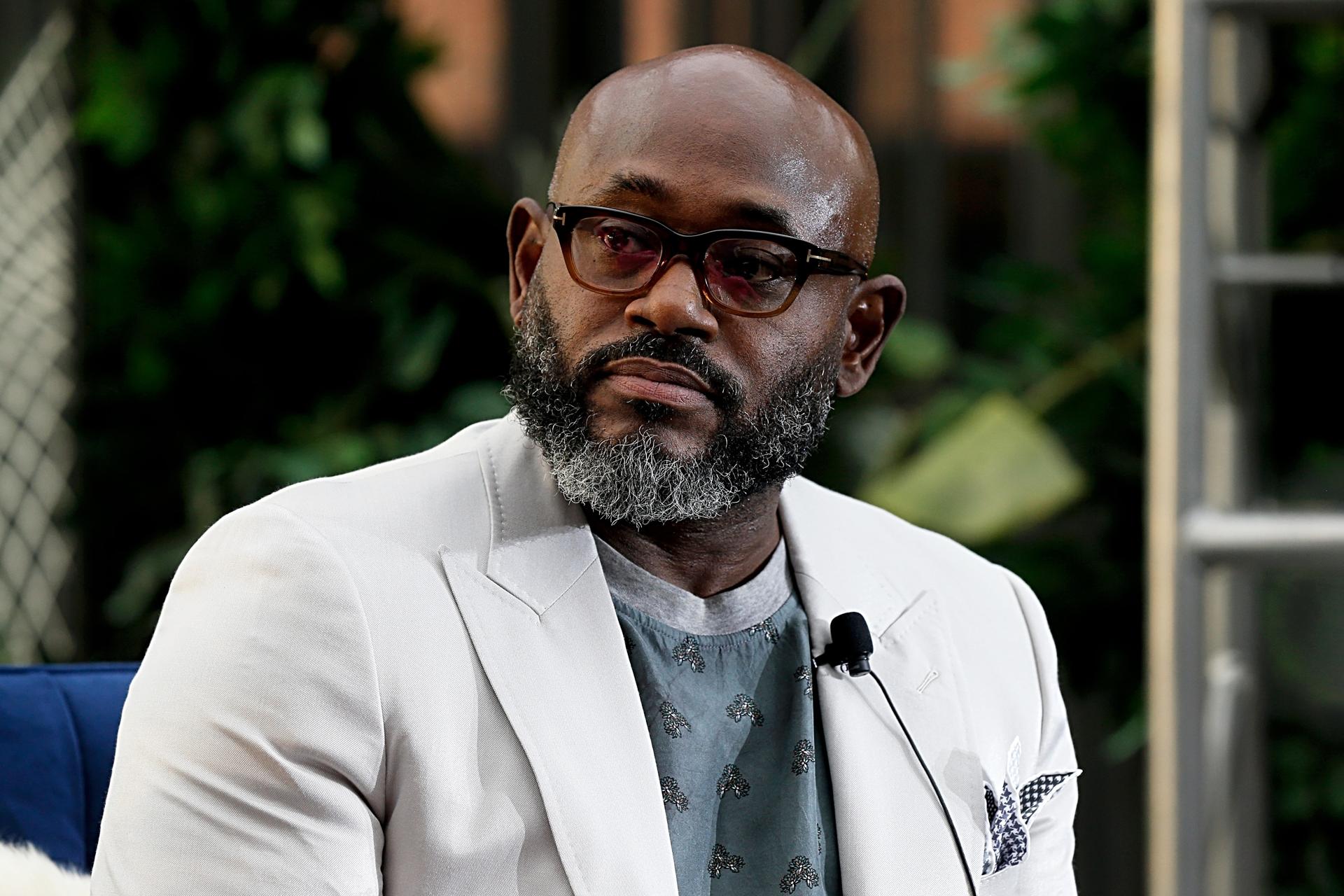
Steve Stoute is not only responsible for closing large business deals that often go well beyond tens of millions of dollars but also have a reputation in the market as an innovator who brings the music and advertising industries much closer. However, even after dealing with and being successful in this high-stakes deals area, Stoute still confesses to one particular transaction that had him losing sleep and feeling more anxious and pressured than he has ever been in such cases.
That critical deal was actually his very first business endeavor. At the time, Stoute was only eighteen years old and still residing in his family’s home located in Queens, New York. Importantly, he had just recently withdrawn from his fifth consecutive college, leaving his educational path uncertain. Faced with this situation, rather than becoming involved in the pervasive local drug trade like many other young people around him, Stoute instead made a decisive choice to establish himself within the competitive field of real estate investment.
Specifically, to gain initial practical experience, Stoute carefully planned to purchase a residential property currently undergoing foreclosure proceedings. His strategic intention was then to quickly renovate and resell this house for a profit, commonly known as “flipping” the property. Nevertheless, one absolutely essential component was missing for this plan to move forward: he desperately required an investor willing to risk a significant amount of money by backing an entirely inexperienced teenager with no proven track record.
His Mother’s Crucial Financial Support
Finally, the key investor was actually no one but his mother. It is important to realize that the Stoute family, who at first migrated to the United States from Trinidad and Tobago, were not wealthy people who had huge financial reserves. On the contrary, believing much in her son, Mrs. Stoute boldly went to the extent of taking out a second mortgage loan on their place of residence. This bold financial move successfully generated thirty thousand dollars in accessible cash. Significantly, she entrusted this entire sum to her son without informing or seeking approval from her husband beforehand.
Thus, looking back at this crucial time in the future in his plush Miami mansion where he was comfortably dressed in a t-shirt and shorts, Stoute, though clearly and in more detail, discusses his psychological status: “I was scared!” He even reiterates this fact: his emotional condition was perceivable, stating “You can’t fuck up your mom’s money on no bullshit idea. Obviously, any time you put money up, anything could go wrong. But it didn’t feel like a high risk to me.” This highlights the intense personal pressure he experienced alongside his underlying confidence in the venture.
Fortunately, Stoute’s inaugural real estate deal proved remarkably successful. In fact, not only did he fully repay his mother the entire thirty thousand dollar investment within an impressively short thirty-day period, but he also presented her with an additional fifteen thousand dollars representing pure profit from the transaction. Recalling the profound impact of this outcome, Stoute states, “It changed me — the idea that I could put money up and not lose it — and, in fact, make more money.” This early triumph fundamentally shaped his understanding of investment and business potential.
Stoute’s People-Focused Investment Strategy
These days, Steve Stoute concentrates his business efforts primarily on investing directly in talented individuals. This strategic approach actually builds logically upon the very foundation of his professional journey, which began initially within the music industry, working as a personal manager. Consequently, his management career started by guiding influential hip-hop producers, including Steve Keitt. Significantly, Stoute utilized profits earned from his earlier real estate ventures to purchase essential music equipment for Keitt. Ultimately, Keitt employed this very equipment to create the instantly recognizable theme song for the highly popular television sitcom “Martin,” marking an important early success.
Progressing naturally from this starting point, Stoute subsequently broadened his management roster to include globally renowned recording artists. He particularly got involved in management responsibilities for the very renowned singer Mary J. Blige and the widely acclaimed rapper Nas, all the while guiding their careers at key stages. Besides this practical experience with managing artist careers, Stoute then shifted to the corporate side of the music industry, occupying key posts in the administration of prominent record labels.
Landmark Success with “Men in Black” Soundtrack
Daring how he managed to achieve so much in the music industry, Stoute had been the biggest executive, establishing the multi-million selling 1997 soundtrack album for the action thriller film “Men in Black”. What is quite remarkable is that the soundtrack under his supervision has warranted over 10 million copies sold. However, Stoute himself has repeatedly offered an extraordinary analogy portraying the project’s way bigger cultural and commercial value. In this context, he often remarks pointedly, “We sold 10 million albums — but they sold 14 million glasses,” directly referencing the explosive sales generated by the iconic Ray-Ban sunglasses prominently worn by actor Will Smith throughout the movie.
The experience not only provided Stoute with a clear-cut strategic direction helping him in making the next major move in his career, but he also purposefully got the critical role of being an ambassador, making connecting the hip hop community with the high-ranking advertising executives in Madison Avenue as influential as possible. Therefore, Stoute stepped in a radically different direction into the field of advertising. This was put into practice when he set up the brand agency, Translation, in 2004. Significantly, Translation emerged as an early pioneer and leader within the specialized field of connecting major musical artists directly with prominent consumer brands and other large corporations seeking authentic cultural partnerships.
Jay-Z’s Definitive Description
For one thing, Stoute could make these connections effectively because he was doing a job nobody else was doing, as Jay-Z mentioned. More particularly, the renowned rapper and businessman made a very memorable comment about Stoute when he described Stoute as “the bridge, the voice between hip-hop and business”, a very complete and accurate way to describe the role that Stoute was playing in those two worlds.
At the same time, Stoute was so kind as to share with many people not only his experience but also the knowledge he had in the field of the music industry. He did it by publishing an influential book in 2011, inspired by the name of “The Tanning of America: How Hip-Hop Created a Culture That Rewrote the Rules of the New Economy. While the book was relatively successful, the author primarily argued that the theories developed became the basis for a television broadcast on ‘VH1’, which later consisted of four main parts that was aired frequently.
With such a distinguished status, it is only right to bestow Stoute with a fair amount of praise. A pioneer of this sort was the Ad Age’s “Executive of the Year”, back in 2016, who clarified his exclusive engagement in the field of advertising. Also, in 2023, the top person to watch in the entertainment industry got a special mention in the Variety magazine by being named among the publication’s “50 Greatest Hip-Hop Execs of All Time,” which in effect cementing his legacy.
Current Status: Miami Power Network
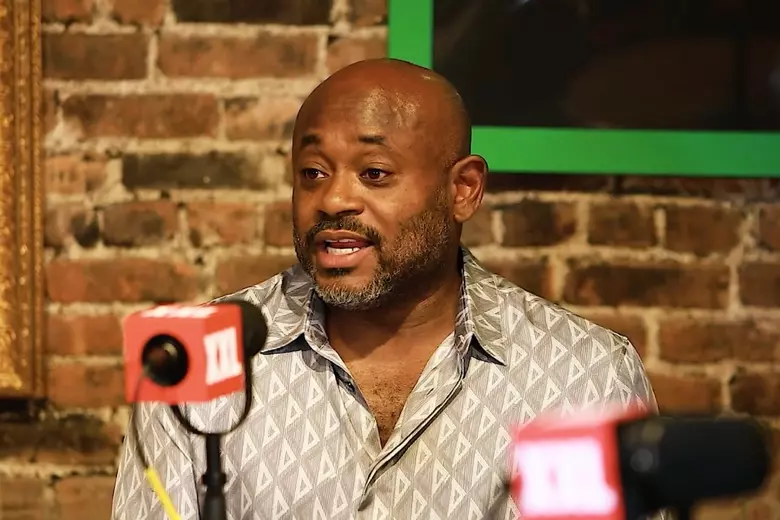
Ultimately, approximately a decade after founding Translation, Stoute is currently experiencing tremendous success following his strategic return to the core music business. Moreover, with his wife, Lauren Branche, Stoute has in recent years nurtured a highly exclusive community of friends and business associates. Their persuasive web consists of an enviable mix of sports, media, business, and political leaders such as basketball star LeBron James and the great quarterback Tom Brady, NBA commissioner Adam Silver, Mayor of Miami Francis Suarez, Graydon Carter who was the long-standing editor-in-chief of Vanity Fair, and Jared Kushner who is a senior businessman in the numerous fields and has also run his own business.
Founding UnitedMasters
Going further on his career path, in 2017, Steve Stoute conceptualized the famous UnitedMasters. As a result, the organization has not only expanded but also surpassed the rest to become the most suitable independent music distribution entity for all types of music not only in the U.S. but also in the world. Additionally, it has been an indispensable instrument in the conquest of the music industry and more so in the discovery and enhancement of the talents of numerous musicians of varying genres.
More precisely, UnitedMasters carried out the support of the early stages of branding and distribution for quite a list of artists like Brent Faiyaz (the R&B superstar) as well as the young and vibrant artists in the likes of Lil Tecca, NLE Choppa, and BigXthaPlug who have become prominent in the music industry. Additionally, it significantly boosted emerging talents from South America, such as singers FloyyMenor and Veigh. Furthermore, that same platform has not only been promoting the successful development of many outstanding Afrobeats artists but also making it possible for them to be known globally.
Importantly, UnitedMasters operates very differently compared to a traditional major record company structure. Instead of demanding that artists sign away ownership of their valuable master recordings to the label, UnitedMasters deliberately designed a system allowing musicians to retain complete, one hundred percent ownership of their original master recordings permanently. This represents a major shift in industry power dynamics towards the creators.
Initial Industry Skepticism
Reflecting on introducing this artist-empowering concept, Stoute recalls considerable doubt initially from the established music business. He states clearly: “When I first started telling artists to own their masters, people thought I was cr*zy.” However, he notes the dramatic shift in attitudes since then, adding, “Now everybody is looking to do it,” highlighting how his model became an influential industry standard.
Fundamentally, Stoute explains that UnitedMasters’ primary mission is not about controlling or directing an artist’s creative path and career decisions. Instead, the company focuses entirely on providing them with a powerful, flexible technological platform and essential resources they genuinely need to build sustainable success independently on their own terms.
Ultimately, Stoute’s strategic vision and bet on this artist-centric model have yielded extraordinary results. At the moment, UnitedMasters Inc., the parent company, which also contains areas such as the UnitedMasters distribution service and the previous organization Translation, hires more than 350 very skilled professionals. These people serve the company in Brooklyn, New York, Los Angeles, California, as well as in San Francisco, California. Impressively, just the distribution company segment alone achieved a substantial valuation of five hundred and fifty million dollars during a 2021 funding round.
Stoute articulates the underlying principle driving UnitedMasters’ approach: “We understand and respect that the artist and the fan have a relationship that the artist understands better than most, and we allow that relationship to blossom.” He firmly believes this focus on direct, authentic connections represents the essential path forward, concluding decisively, “That’s the future of the music business.”
Stoute’s Queens Birthplace
In ‘1970, Steve Stoute came into the world in the neighborhood of Queens Village, New York. His arrival took place exactly three years before the acknowledged official year of the birth of hip-hop music and culture. Thus, his growing-up times got shaped in a milieu which was deeply immersed in that vital trend which was quickly to take hold of popular culture globally.
A short distance as quoted by Stoute, “a three-to-five-mile radius of my neighborhood,” actually had a lot of people who later became the masters of the hip-hop universe. Among the first-ever to change the sound of the youth culture of the time in that neighborhood were music executive Russell Simmons and his younger brother, Joey Simmons. The latter acquired fame as Rev Run, a member of the legendary Run-DMC crew.
Moreover, those who also accompanied their future are the Run-DMC partners – DMC (Darryl McDaniels) and the late Jam Master Jay. Phife Dawg, Q-Tip, and Jarobi from the famous A crew Called Quest, as well as superstar rappers LL Cool J and Ja Rule were also living in the district just like the locals. The striking amount of talent in this collaborative community center not only made Queens the heart of hip-hop but also signified the powerful second wave of this music genre.
Importantly, the extraordinary success achieved by Run-DMC fundamentally altered possibilities for aspiring individuals within that community. Stoute emphasizes this point directly, recalling how their triumph “created an ecosystem in that area where people saw there was a way in.” Their visibility demonstrated tangible career paths emerging from the local culture, providing inspiration and a sense of attainable opportunity.
Early Fascination with Local Battles
At the age of eleven, Stoute had developed a towering interest in being hands-on with the local rap scene’s lively energy. It was quite common for him to stand by while a skilled teenager in his area, called James Todd Smith, who would later become LL Cool J, performed his art. Stoute watched the teenager be a regular feature in the Coliseum Mall shows, where he was performing every time and winning over other rappers definitely. His witnessing of the displays of verbal craft allowed him an affinity with the young Stoute.
LL Cool J’s breakthrough to popularity during the mid-80s, along with the explosion of Run-DMC and Russell Simmons’ Def Jam Recordings label, has had a profound effect on Steve Stoute. The whole string of events later emerged to be Stoute’s inspiration that he could conduct his career firmly attached to the music industry, which he always adored.
Accordingly, Stoute secured his initial professional break in the late 1980s. He took over the position of a roadie who worked tirelessly for the famous hip-hop duo Kid ‘n Play. This highly spirited duet went viral at that time, and a large factor in their success was that they were the main characters in the first two parts of “House Party” movie series. So, while dealing with such hard and very challenging backstage labor, Stoute was manufacturing his knowledge of the music business.
Balancing Music with Real Estate
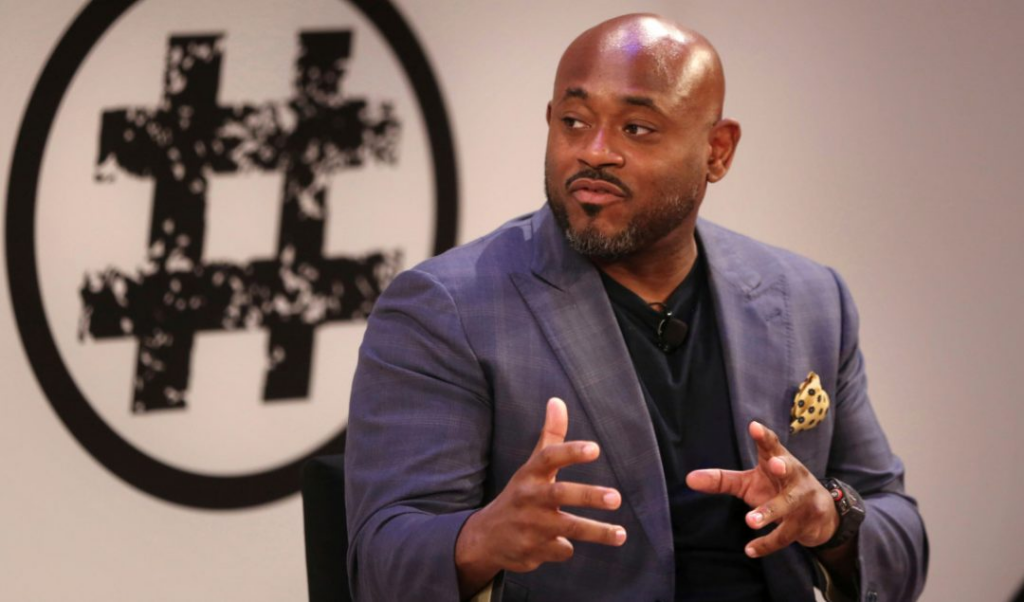
Simultaneously, he continued working resourcefully in the real estate field, describing this dual-focus period succinctly as “just hustling.” He was determined to build multiple streams of opportunity and experience during these foundational years.
Remembering the industry atmosphere during his entry, Stoute provides a down-to-earth viewpoint: “When I got into the business, it was not a lot of money.” He, however, emphasizes that this limitation did not in any way outweigh the strong sense of community. He alleges, “But it felt like a community of people were trying to prove hip-hop was a movement.” There was a shared mission beyond mere profit.
Nevertheless, navigating this highly competitive field sometimes led Stoute to express himself with a directness that occasionally cost him friendships. DJ Wiz from Kid ’n Play offers a firsthand observation: “Steve was very upfront. He was young, but he was hungry and aggressive. Steve’s gift back then was his unabashed confidence. He always left an impression — sometimes not always good.” His assertiveness was a defining, if occasionally polarizing, trait.
The Pivotal Uptown Records Visit
Progressing forward, a profoundly significant moment arrived in November 1991. Stoute found himself visiting the Manhattan offices of Andre Harrell’s highly influential Uptown Records. This location would soon become widely celebrated as the essential mecca for the emerging genre known as hip-hop soul.
Stoute unequivocally states the impact of that day: “That day changed my life.” He vividly describes the scene: “Andre [Harrell] was there. Howie T, who produced Chubb Rock, had a label up there. A young Puff [aka Sean ‘Diddy’ Combs] was walking around. Kim Porter was the receptionist.” He emphasizes the inspiring atmosphere, recalling it as “beautiful Black people in a professional environment, making music.” Access itself was facilitated by a woman he knew in the promotion department, the sole reason he was permitted upstairs.
Crucially, this contact played a specific song for him from an upcoming movie soundtrack Uptown was preparing. The title of the song was “You Remind Me,” and the singer was a new singer by the name of Mary J. Blige, Stoute declared that his introduction to the song was intense, like the first touch of an electric shock: “I just knew when the beat hit, I was like, ‘This is all I’m doing for the rest of my life. This is it!” This outstanding and unique musical event basically became his music industry career.
Rapid Rise to Prominence
At Uptown Records’ turning point, in only five years, Steve Stoute’s career has had a tremendous lift. This is not the climax of his success because he made a deal with the artist to manage him and he made it. He reached the top of his career when he was working as the executive producer on Mary J. Blige’s third studio album called “Share My World.” The album was not just a successful album according to the critics, but it was also commercially very successful and sold over 3 million copies, which allowed the RIAA to declare it as triple platinum. It needs to be mentioned, however, that the head in his career was not an instant success, but a result of his time and effort to vertically build one’s brand and diversify his skills and cross connections in another part of the music business, respectively.
Initially, Stoute focused his management efforts specifically on music producers. His choice was based solely on the observation he made at the beginning of his career. He vividly defines his eagerness as follows: “When I came into the business, one of the first things I noticed was that people were getting taken advantage of, and they didn’t have anybody to advocate for them.” He perceived a widespread problem, adding pointedly, “Everybody was incentivized to fuck other people over.” This environment fueled his determination to represent creators fairly.
Success with Keitt and Trackmasters
Building upon his initial positive experience managing Steve Keitt, which included the profitable real estate investment funding Keitt’s equipment and the subsequent creation of the “Martin” theme song, Stoute subsequently began collaborating with the highly sought-after production duo known as the Trackmasters. These producers, who are also professionally known as Poke & Tone, besides Biggie Smalls and Mary J. Blige could be found in their list of achievements. The duo, however, are of the opinion that their success was not treated properly concerning the royalties for their input.
Therefore, Stoute actively stepped in, dedicating himself to reorganizing their business affairs and securing fairer deals. Tone, one half of the Trackmasters, recalls Stoute’s formidable approach during negotiations with a mix of amusement and respect: “He was an animal; no one cared for him at all.” Tone clarifies Stoute’s character while acknowledging his intensity, stating, “Steve isn’t a bad guy, but if you’re on the other side of somebody he’s working for, that conversation may be just a little aggressive.” This direct, unyielding style became a hallmark of his early management.
Transition to Artist Management
Ultimately, leveraging the credibility gained from effectively representing producers, Stoute strategically expanded his management company’s scope to include recording artists. His first major signing in this new phase was the legendary rapper Nas, hailing from Stoute’s own Queens background. After partnering with Nas, Stoute made his relationship with Mary J. Blige official, which was actually the idea he had at Uptown Records quite some time ago.
Reflecting on the eminent work relations’ impact, Nas shows his unwavering respect for Stoute while calling him his “big brother” even now. He shows his dedication to him: “Straight up and down, the man is a pure genius.” Nas further underscores Stoute’s unique foresight, declaring, “He’s an absolute visionary who saw farther than more seasoned and experienced players in the game ever did.” This highlights the deep respect and recognition Stoute earned from a pivotal artist.
Stoute managed Nas diligently for a significant five-year period, navigating the complexities of the music industry together. Expressing sincere appreciation for the rapper’s early faith in him, Stoute acknowledges a fundamental truth: “Nas was the first artist to believe in me.” This belief provided the crucial foundation for Stoute’s subsequent ascent within artist management and the broader music business landscape.
Meeting Jay-Z in 1996
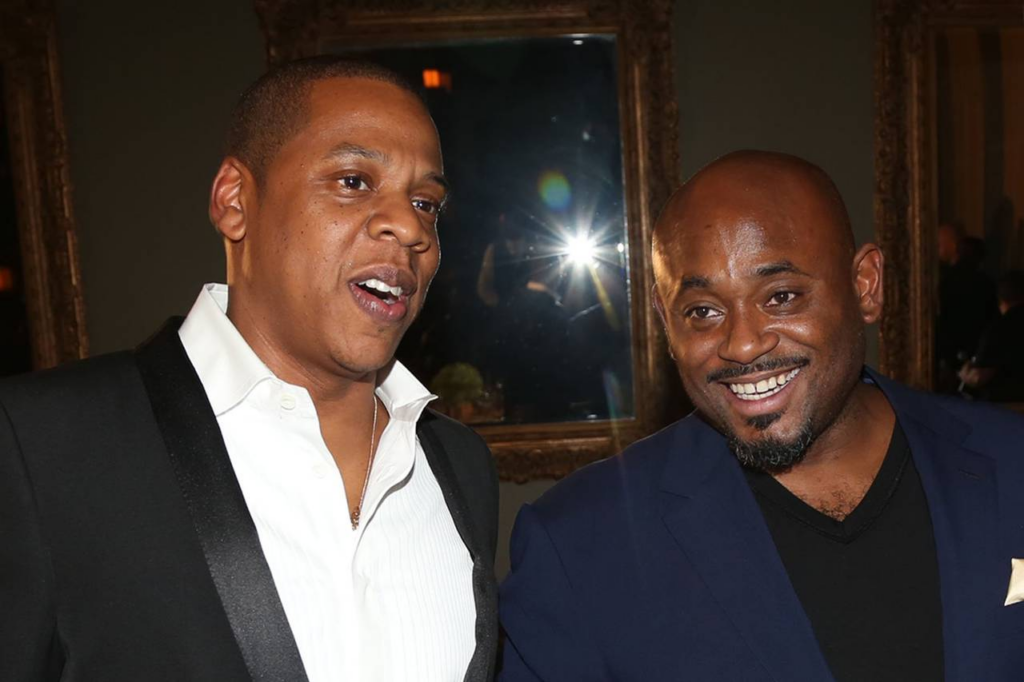
During this crucial part of his career, Steve Stoute was able to forge a friendship that evolutionized into one of his most critical and long-standing professional relationships; his friendship with Jay-Z. Stoute seems to have had the first meeting fresh in his memory: “I met Jay in ’96,” and further telling that it was “when he wanted to sign this artist I was working with to Roc-A-Fella.” This label later grew to match Jay-Z’s Roc Nation empire. Although Stoute reveals that the deal may have had a chance when he says, “We were going back and forth, but they took too long to send the contract, and the artist was deciding to go in a different direction.” He opts not to disclose information about the artist involved in this situation.
This breakdown in negotiations consequently led to a direct meeting between Stoute and Jay-Z’s team. Stoute describes the atmosphere of that meeting as distinctly “contentious.” He elaborates on the core disagreement: “They thought because they had said their intention was to sign him, the artist should stay in a holding pattern, and I was like, ‘The world doesn’t work that way.’” Stoute firmly believed the artist had the right to pursue other opportunities without being indefinitely stalled.
Foundation of a Lasting Friendship
Despite this challenging start, Stoute emphasizes the positive outcome: “But obviously, Jay and I have developed a great friendship.” Furthermore, around that pivotal time, they discovered a surprising personal connection: “not only did he and I find out that we had family members who were related.” Crucially, they also identified a powerful alignment in their professional outlook: “we also had the same values around what the business could be.” Their shared vision focused intently on expanding hip-hop’s commercial reach far beyond music sales.
Stoute details their forward-thinking conversations: “We were thinking about sneakers and advertising and corporations and opportunity, and ‘How do you take this thing and turn it from just selling records into something that’s much more of an enterprise?’” He concludes by noting the prescience of their early discussions, stating definitively, “What we were thinking back then is what’s happening right now,” highlighting how their concepts became industry realities.
Concurrently, it was virtually inevitable that Stoute would soon transition into executive positions within major record labels, beginning energetically during the bustling mid-1990s. (It’s important to note that many of his professional roles frequently overlapped during his career.) Subsequently, he held significant positions, including President of Urban Music at Sony Music. In this powerful role, he famously signed the then-emerging rapper 50 Cent. Later, he advanced further, serving as Executive Vice President at the prominent Interscope Geffen A&M Records.
The Combs Office Incident
Also, during this intense phase working within the label system, Stoute experienced a highly publicized and violent confrontation. A music video segment by Nas, which happened to be Combs’ least favorite, was the direct cause that made Sean “Diddy” Combs and some of his partners beat up Steve Stoute in his own office. Subsequently, Stoute filed a lawsuit against the assailants and through it the two sides reached a deal for an amount of five hundred thousand dollars. When asked if he would like to talk more about the tough times and his relationship with Combs after that, Stoute come up with a very brief, yet optimistic, statement: “We were young, it was the past, and we moved on.”
Despite noteworthy accomplishments in artist management as well as the executive level in major record companies, his experiences with the “Men in Black” soundtrack repeatedly nudged him to a new path. It is, therefore, no surprise that he made a significant and definitive change in his career early in the last decade. He courageously walked away from a lucrative label salary reported at two and a half million dollars annually. Instead, he accepted a significantly reduced income of just one hundred and fifty thousand dollars during his very first year venturing into the advertising industry. This risky move set the stage for his next major venture.
Founding Translation and Major Campaigns
His calculated risk was perfectly right after Streamline officially founded his creative advertising company, the Translation Agency. Taking charge of it, the agency developed some of the most memorable and widely spread marketing expressions and tunes of the time. Among these ubiquitously popular campaigns were the McDonald’s international “I’m Lovin’ It” slogan and the social empowerment anthem “Made in America” done for Budweiser where Jay-Z was the second artist.
Additionally, Translation has found one of the greatest roles in the Reebok brand’s comeback by making it cool and culturally relevant through its colossal efforts in this sphere. An exclusive footwear contract with Jay-Z being the first of its kind spanning hip-hop history, and later it was followed by a similar game-changer contract with 50 Cent, which was the most outstanding deals made by one of the agencies. Also, it was the very good work of the company Translation because they used the likeness of two very different artists, the basketball player and the rapper, to target their promotional campaign that got to the hearts of many in the masses of the global market.
Confidants Inspire New Direction
Even though Translation was performing exceptionally well and achieving significant success, Steve Stoute simultaneously began developing another major strategic idea. Crucially, his strong confidence in this new venture stemmed directly from separate conversations with two of his most trusted advisors within the music industry. These individuals provided essential insights that shaped his thinking profoundly.
Stoute explains the pivotal discussions clearly: “Both Jimmy Iovine and Jay-Z were talking to me separately about how they were building streaming platforms.” He talks about their very same projects:”Jay’s telling me about Tidal and Jimmy’s telling me about this project called Daisy, which was the code name for [the platform that] became Beats Music, which became Apple Music.” After all, Apple later acquired the parent company of Dr. Dre and Iovine, Beats Electronics, directly through a million-dollar deal with them in 2014. Getting to know the future plans spoken by such high-profile figures was a very important moment.
Consequently, Stoute formulated a clear business opportunity based on their moves. He recalls his thought process: “‘If the last two entrepreneurs in the music business are leaving to build these streaming platforms, then someone could build a vehicle to put music into those streaming platforms.’” This reasoning crystallized into a powerful concept: “If artists can get distribution for their music, why would they need a record company?” He envisioned bypassing traditional label structures entirely.
Observing the SoundCloud Generation
Meanwhile, as music streaming rapidly gained widespread adoption among both artists and fans throughout the early and mid-2010s, Stoute’s concept gained significant relevance. He observed a specific trend: “There were a bunch of kids on SoundCloud, but they were being picked up by the record companies.” This common path prompted his strategic counter-proposal: “I was like, ‘Instead of going with the record companies, why don’t they have a system where they could stay independent? Let me build this thing.’” He aimed to create that essential system for sustainable independence.
The community was further enlightened when Stoute decided to formally introduce UnitedMasters on the 15th of November 2017. The announcement was mainly focused on the encouragement of talented, upcoming musicians. Apart from that, it made clear the significant amount of seventy million dollars they got in the first round of funding from Alphabet, the mother company, the famous venture capital firm Andreessen Horowitz, and 21st Century Fox, a global media and entertainment company. This substantial backing signaled strong confidence in his model.
Since its founding, UnitedMasters has nurtured numerous successful artists. Another success story worth mentioning is the rapid ascent to fame of the rapper BigXthaPlug. His music has enjoyed quite an impressive following, with a whopping 1.5 billion streams gathered from different platforms. On top of that, his most recent album entitled “Take Care” has reached the top solo position of the really noteworthy Billboard 200 albums chart.
Breaking Genre and Chart Barriers

Moreover, BigXthaPlug’s new joint track “All the Way” has done incredibly well for itself in the music charts. The track not just climbed to the top of Billboard’s own country singles chart but also opened at a stunning number four on the very broad Hot 100 chart. The record hit became the first ever case of a UnitedMasters artist who managed to get into the top ten on an all-genre music list, thus marking a huge breakthrough for the organization.
Beyond this landmark achievement, several other artists distributed through UnitedMasters have also reached the pinnacle of various Billboard genre-specific charts. These include notable success stories topping charts within the rap category, the increasingly popular Afrobeats genre, and the expansive Latin music market. This widespread success across diverse musical styles underscores UnitedMasters’ effective reach and impact within the modern music industry.
Artist Praise for UnitedMasters
BigXthaPlug expresses strong satisfaction and recognition for the platform that supports his music career, stating clearly: “UnitedMasters understood my vision right away.” He further emphasizes the significant impact on his success, adding with evident appreciation, “The success I’ve seen with ‘Take Care’ is something I never imagined.” This direct endorsement highlights the effectiveness of Stoute’s artist-centric model from the performer’s own perspective.
Equally, taking a look back on the extremely varied nature of his own professional trajectory, Stoute would easily agree that he had never imagined his career achievements would be at this present level. when asked about a colleague that he is very close to, Jared Kushner, the former president’s son-in-law, with whom he became well known, Stoute tells the story in a very organized way. He clarifies the timeline directly: “I met Jared many years ago, before he had anything to do with the White House.”
He identifies NBA Commissioner Adam Silver as their mutual connection who initially brought them together. Stoute then explains Kushner’s relocation decision following the conclusion of Trump’s first presidential term: “After Trump’s first term was up, Jared moved down to Miami to try to get away from …” He pauses thoughtfully before characterizing Kushner’s subsequent social approach: “He became very specific with the people he spent time with, let me just put it that way.”
Deepening Friendships and Business Opportunities
Progressing from that initial reconnection in Florida, Stoute describes how their families grew closer: “Anyway, me, my wife, him and Ivanka, became very, very close friends.” This personal bond unexpectedly opened significant professional doors for Stoute. He explains this development: “I do a lot of business in the Middle East now, and my invitation to it was through Jared.” Specifically, Kushner invited Stoute to attend the high-profile FIFA World Cup event held in Qatar. Stoute underscores the importance of that journey: “That trip opened my eyes to the possibilities of the Middle East.” Crucially, he emphasizes that the business access followed the established personal trust, noting, “But up until that point, we had just developed a friendship and a trusting relationship.”
Turning his attention back to his various business ventures, Stoute prioritizes acknowledging his team’s contribution above all else. He states firmly, “I’m proud of my team first and foremost.” He then reiterates the foundational purpose driving UnitedMasters, contrasting it sharply with traditional industry metrics: “Because building an independent company like UnitedMasters, our goal wasn’t to go to No. 1; our goal, first and foremost, was to help artists be independent and own their masters.” However, he acknowledges with a sense of accomplishment that their artist-focused approach is yielding mainstream recognition regardless: “But we’re having No. 1s, and that’s not even the game we’re playing.”
Industry Impact and Validation
Concluding his thoughts, Stoute signals a significant shift in the music business landscape directly attributable to UnitedMasters’ proven model. He declares assertively, “Now the industry has to pay attention.” The statement reflects the observation that the leading position of streaming services is beyond any doubt, a position which they achieved by artists’ help and at the same time, implies that their recognition of the artists’ success in achieving chart dominance while changing the business model of the record labels completely, which in turn, requires the industry to recognize and change their tactics corresponds to the stages of their innovative journey.