
“The Mystery of Time”: William Shatner on 60 Years of Star Trek
“The mystery of time,” ponders William Shatner, and we are, as it were, back on the bridge of the starship, listening to one of Captain Kirk’s philosophical speeches. “Besides the time passing and our interpretation of it,” he says.
“What exactly is time?” “Time is just an abstract entity. After all, how can you measure time? The question of whether 60 years really means anything would be an interesting debate.” “Time, in its essence, the passing of time, is such an intangible thing that it is almost impossible to define.” On the flip side of the coin, if Dolly Parton has passed away, it is a clear example of how we are affected by the passing of time, and it is time’s passage we are actually getting at here.
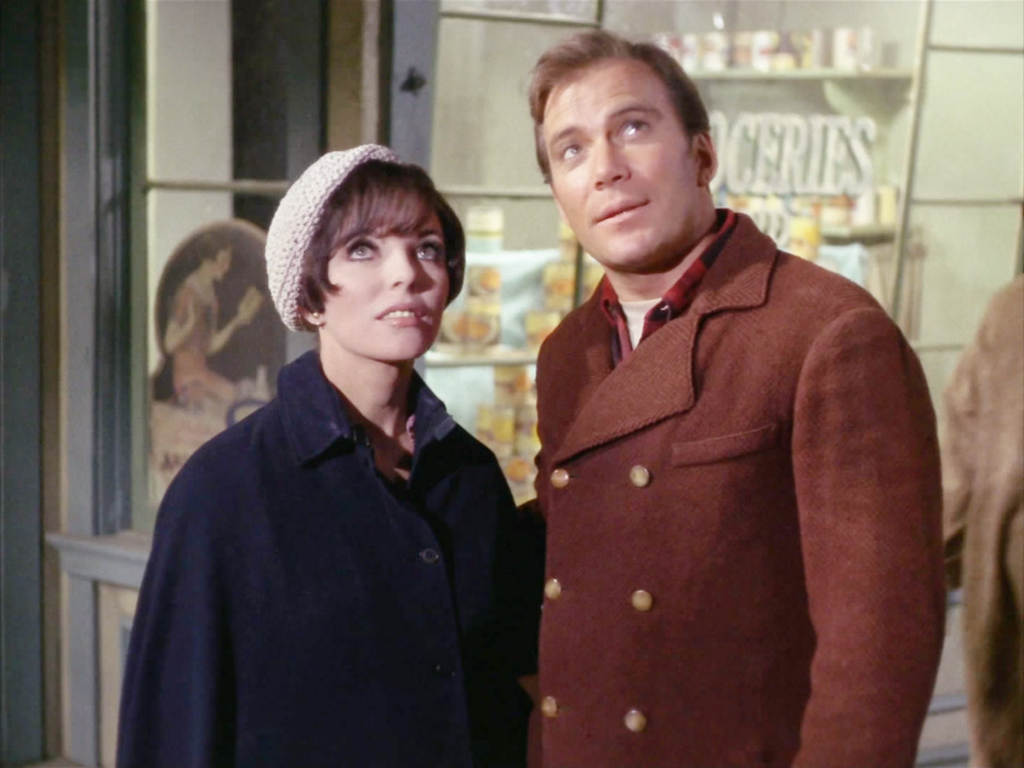
In one episode named “The City on the Edge of Forever,” William Shatner, as Captain Kirk, time-travels and is involved with a pacifist female character named after an Edward, who is the real Joan Collins. Later, their realization is that she was a very important person in history whose death in this particular timeline would have enabled the emergence of Nazi Germany and the dominance of Nazis over other sides in the Second World War. These moral dilemmas explain how Star Trek will mark its 60th birthday on 8 September not only as a cultural phenomenon in the USA but also as a mirror for American politics.
Produced in an era of optimistic thinking, the series gave a view of the future where people wanted exploration instead of conquest. In this society, racial unity and understanding prevailed over differences and narrow-mindedness. Big government and large tech companies were the ways to freedom and happiness, as scarce resources and inequality problems did not seem to be present in the society. Star Trek fans ranged from political activists, such as Martin Luther King and his wife, Coretta, who said that the reason for Star Trek, besides being politically and socially very relevant, was the fact that their children were the only two children they would ever have. They were, however, quite strict about what kind of programs the children would watch, and Star Trek was one of the few programs they would allow the children to stay up and watch.
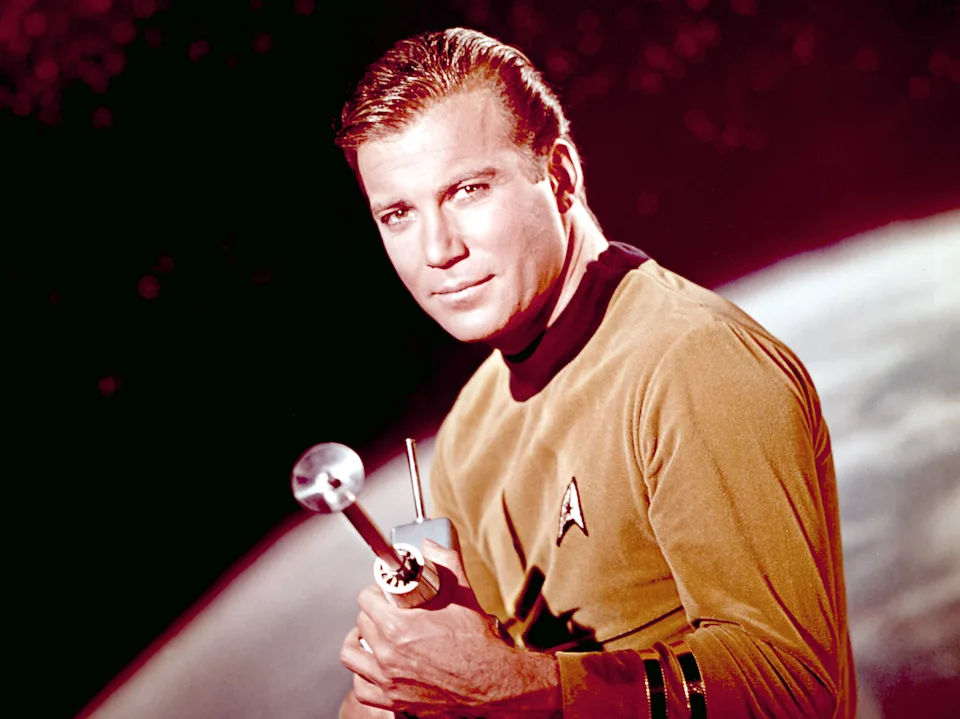
At 60, William Shatner Says Star Trek Still Faces “Wokeness” Debates and Cancellation
But 60 years later, the Enterprise is running into a few obstacles in the universe. Mr. Trump’s America is in a state of unrest; polarization, culture wars, and the retreat of liberal democracy are the main drivers, accompanied by people’s anxiety over artificial intelligence and climate catastrophe. Paramount, after an $8bn merger with Skydance Media, immediately axed the next Star Trek series, citing, among others, that it was “too woke.”
Right-wing critics are longing for a return to the time of the Iowa-born Captain Kirk, who, in their opinion, is a great American figure, even if William Shatner is actually a Canadian. Having been rejected by NBC following Jeffrey Hunter’s dour pilot performance as Captain Pike, he was hired in 1965, and he brought an athletic, theatrical, charismatic energy that elevated the more intellectual type of storytelling.
“I saw the film, and I think it was quite fascinating, a little bit tiresome, though,” reminisced William Shatner, whose energy at 95 is remarkable, about the original pilot while talking over Zoom from his LA residence, where his dogs are sleeping nearby. “So I suggested maybe a more lighthearted approach, and we made another pilot, and it sold.”
When Kirk and Uhura Kissed—And William Shatner Refused the Activist Label
In contrast, Shatner’s laid-back style did not hinder his historical achievements. Besides being the producer, Nichelle Nichols, the actress playing Lt. Nyota Uhura, also participated in the making of Plato’s Stepchildren, which was released in 1968 and became the first high-profile television episode in history featuring a screenplay that includes the interracial kiss that takes place onscreen. Was William Shatner even aware of the scene’s trailblazing character?
He answers, “I was told,” in what sounds like he is unwilling to be portrayed as a civil rights figure.
Shatner then gets philosophical and says he sees a kind of “infrequent haters” that documentary filming “dramatises” merely to shock the audience, and he argues, “The vast majority of us have a desire to be left in peace, just barbecue and live quietly, and then we want to go and do our thing. You just believe your own opinion, and if we refrain from interfering in your life, I am not going to get involved. I believe that most people want to do exactly that, and if they are given more opportunities to express themselves through communication, then it will be obvious to us that all that human beings truly desire is to be just human.”
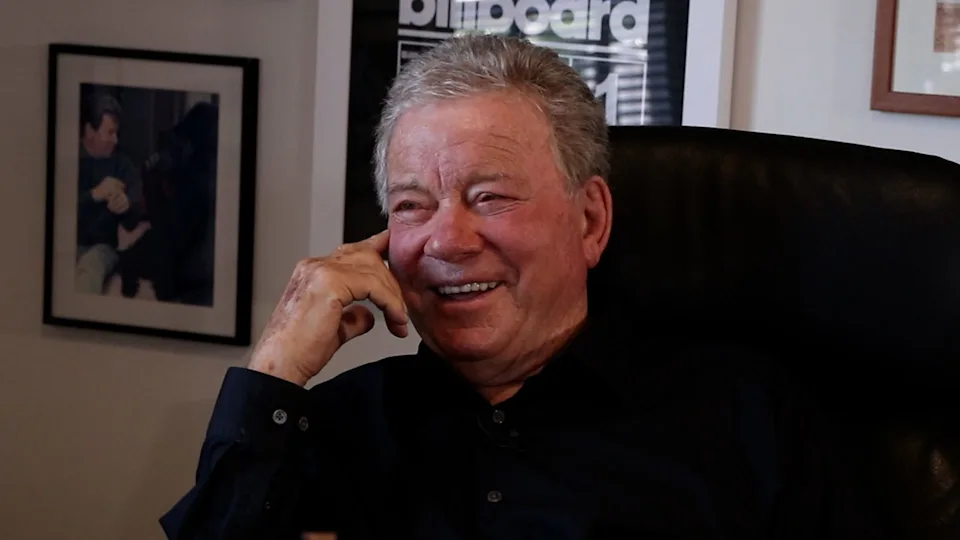
“What Is ‘Woke’?” William Shatner Responds To White House Criticism
The space adventure has not ceased to surprise even some of its least expecting supporters. It seems that Stephen Miller, who serves as the Deputy White House Chief of Staff and is also the main ideologue behind the most extreme Trump immigration policies, was so upset by the latest Star Trek episode, Starfleet Academy, that he turned to a Twitter account named End Wokeness in January to mock it, which he called “Beyond Parody.” “Tragic. But it’s still not too late for @paramaultplus to save it. Step 1: Apologize to @WilliamShatner and hand him over total creative control.”
Shatner is amused by the thought of White House staff spending their time picking apart a TV series. He says, “Can you picture that they’re watching TV, criticizing TV? It’s really odd! I am totally lost on why they don’t. I want to be political. I am a Canadian in America, but this is gripping.”
Shatner says that Miller is wrong when he claims that inclusivity in STAR TREK has reached an absurd level. He said, “I have no idea how we can go too far. Where is this line drawn? Who laid down the boundary? “Now you’ve gone too far.” Excuse me, I was unaware of this. Where should I have stopped? And incidentally, what is “woke”?
Imagine In Space: Why Star Trek Still Divides Capitalists and Utopians
In creator Gene Roddenberry’s 23rd-century world picture, nation-states no longer exist; planets have allied themselves to the extent that it forms a sort of United Nations in outer space, and human welfare has been taken care of by means of an almost utopian arrangement.
There was no more suffering from poverty, disease, or hunger, and people did not need any longer money in Federation life. Everyone was trying the way of improving themselves and not the old-fashioned way of collecting things for personal satisfaction. Some would say that John Lennon’s ‘Imagine’
is something like that. While some imagine it, for others it’s like a horror.
In 2017, the billionaire investor Peter Thiel was asked in an interview with Maureen Dowd, “For me, Star Wars is the show of capitalism while Star Trek is that of communism.” In Star Trek, money is almost non-existent except that you have the transporter machine, which is able to produce everything you need. On the other hand, the plot of Star Wars starts with Han Solo’s need to pay off his debt, and it is money that drives Star Wars’ plot.” Sounds as if William Shatner is somewhat laughing at himself after going to space at the ripe old age of 90.
“Peter Thiel must be a highly intelligent and creative man who is full of ideas. It must mean that he is self-sufficient and he has good ideas for which money has been his reward. He talked about money, which is only one part of life. We also make use of other things apart from money. Star Trek represents other things. I would surely like to be in a conversation with him if the opportunity is there. I would surely like to discuss the Star Trek versus Star Wars differences.
Did Stephen Miller Miss The Memo? Star Trek Was Always About Peace
One difference has been pointed out by Shatner’s pal, the astrophysicist Neil deGrasse Tyson, who believes that Star Trek is more science-accurate. In addition, Star Wars gets its mythology basically from the classical hero story that the scholar Joseph Campbell formulated. On the other hand, Star Trek emerged in a time of deep wartime fear after the 1960s—a time of a very painful history of the mid-20th century.
Roddenberry was a decorated bomber pilot in the Second World War, and afterwards, he experienced a very serious commercial plane crash in the desert of Syria, where he narrowly survived. Gene Coon, who wrote with him, was a marine and underwent training as a war reporter during the Korean War years.
Mark Altman, co-writer of The Fifty-Year Mission and a director of a new documentary, The 60-Year Mission, says via Zoom (he is in LA): “They considered Star Trek the way they had lost many friends and had seen war firsthand. They did not have any illusions about it. They knew the sacrifices of war. They would not have thought of changing the Department of Defense to the Department of War. They thoroughly hated all wars.”
“This is so surprising to me. For one, these ultra-conservative fans, like Steven Miller, can say, ‘I’m a huge fan of Star Trek.’ But how is that possible? They didn’t get the warning that Star Trek in real life hates war, that it consistently says that only talking can win a conflict,” Mr. Altman says.
Uhura, Sulu, Spock: The Bridge That Changed TV
No example could illustrate this better than the episode “Arena” from 1967, in which Captain Kirk refuses to kill the monstrous, destructive Gorn that has wiped out a Federation base. Altman: “Kirk decides here not to kill the alien creature, which has destroyed our base and also killed his friends. One might view this episode as just the silly monster on the green screen that you have a fun time with, but the main reason such an episode becomes so famous and well remembered is because of the message.”
Watching TV back in the 60s meant seeing only white faces in those cowboy shows. Star Trek was different. Instead of prejudice and discrimination, there was a new way of working together that showed itself when the African American girl—Nichelle Nichols as Uhura—was the one doing the communication with a very calm and confident attitude (she initially wanted to end it after one season, but Dr. King convinced her that she really should keep doing her role); Sulu, the pilot from Captain George Takei, hardly two decades after that part of America where the Japanese internment camps were still the norm; plus there was Mr. Spock, the alien chief, who was, in Altman’s words, “the ultimate immigrant.”
Altman also highlights the fact that such an environment of inclusion was even visible in the regular cast members: “Did you ever think of the racial variety in the supporting characters? There was, for instance, that scene when the superior of Captain Kirk is presented, who turns out to be a Black African American person, Commodore Stone, played by the late Percy Rodriguez. Long before the Colin Powell affair, here you see a white person under a Black boss. These things are also quite telling.”
Kirk vs. Picard: How Star Trek Tracked 30 Years of American Politics
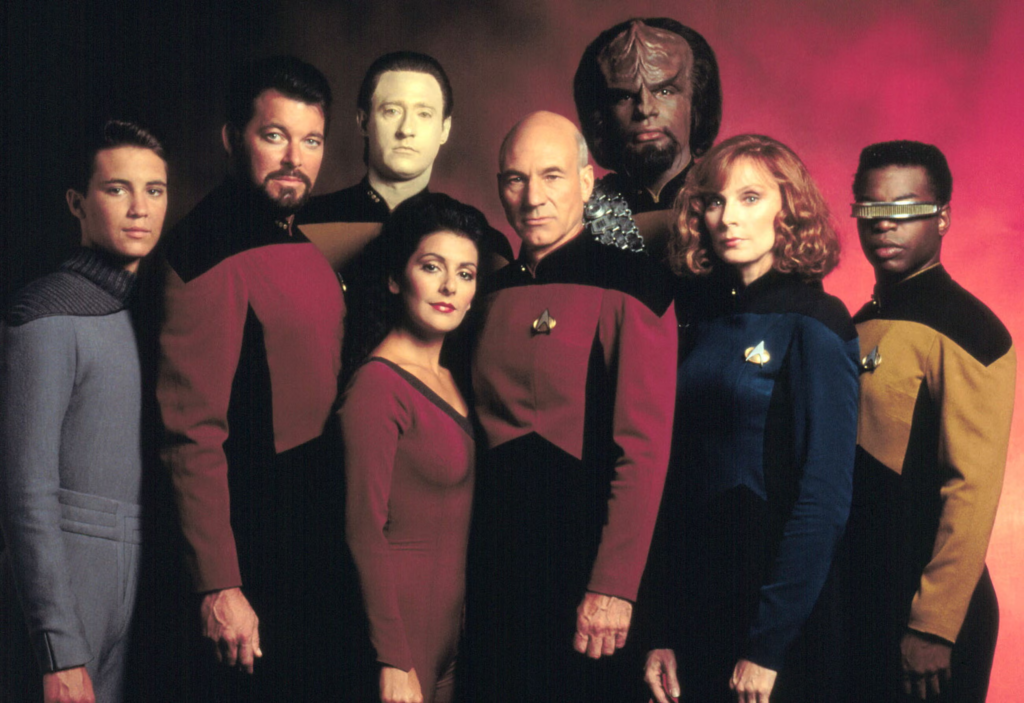
The initial show lasted from 1966 to 1969, which was no coincidence since it coincided with the Vietnam War, racial violence, and the assassinations of John F. Kennedy, Martin Luther King, and Robert F. Kennedy. Animated series and movies were added to the mix later on. After that came The Next Generation, which aired between 1987 and 1994. Its captain, Jean-Luc Picard, was portrayed by the Shakespearean actor Patrick Stewart. Some other television series were Deep Space Nine, aired from 1993 to 1999; Voyager, from 1995 to 2001; and many others.
In his view, Altman likens Kirk to John F. Kennedy for a simple reason: both were young presidents who, at that stage, had no experience. “The New Frontier is indeed the final frontier. Kirk is certainly a Kennedy-like liberal. A man at large on one hand yet extremely strict at times, especially regarding the defense matter—it was basically an old-fashioned moderate, different from today’s democratic socialist. It was an ideology of meritocracy; it is supposed that everyone has to stand on similar ground at the start of the journey; afterwards, the focus is on how gifted you are and your potential.
“On the other hand, if one takes a look at The Next Generation, they have a very George HW Bush look & feel: community-driven development & a thousand points of light. There is a quote that Kirk delivers: “I shall inform you when this becomes democracy.” Picard, on the other hand, is more of your typical negotiator type, who would organize lots of discussions to get opinions of people from diverse areas.
From Rodney King To Elon Musk: Star Trek And The Politics Of Rebuilding
“You can take this further to many Star Trek series that were obviously a product (if not directly) of the president, but mainly of the mood in society at the time.” “The Deep Space 9 season was a major rewrite following the Los Angeles riots and the beating of Rodney King. Rebuilding, and can’t we all just get along? The show has one of the best Star Trek quotes: ’It’s easy to be a saint in paradise.’” When you are a spaceship and everything is perfect, it’s very easy to be a saint in paradise. But when you are a station, there are more problems and disputes. It was all about reconstruction, and it kept raising the question of human coexistence.
The most recent series, Starfleet Academy, featured Oscar-winning Holly Hunter, who played the captain and another character, the chancellor, alongside Paul Giamatti, who played the protagonist. The show was filmed on the franchise’s largest and most expensive set. It was intended as a story about the Federation rebuilt by a young cadet after an apocalyptic event, and it is also the theme of institutional renovation.
However, with the merger of Paramount with Skydan, which is led by David Ellison, the son of Trump supporter Larry Ellison, Starfleet Academy was canceled, and its upcoming second season was set to be its last. Miller had been joined by tech billionaire Elon Musk in a MAGA pile-on denouncing the show’s alleged wokeness.
From Hologram To Algorithm: Picardo And The AI Debate
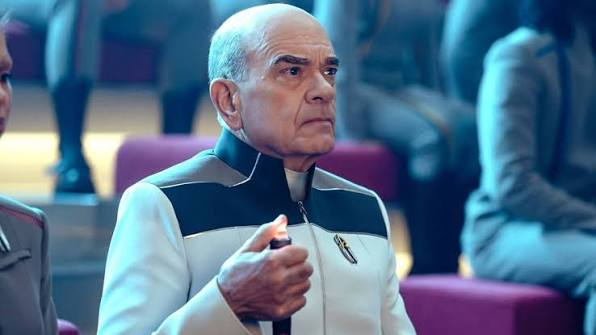
According to Picardo, who played a holographic doctor over seven years who was trying to become sentient while also fighting for civil rights on Star Trek: Voyager, it is quite surprising to realize how closely the topics people now talk about around generative AI, created in a Silicon Valley context, remind him of the situations and stories he created as a performer.
“The way that the technology is growing and the incredible speed with which it is taking over have come completely unexpectedly to almost everyone.
“It is an amazing and very handy invention, but it has stirred quite a few difficulties. We created Star Trek episodes; the writer role was embodied by my character, who came up with a new book that was not original, and the matter of an artificial intelligence having intellectual property was discussed. In one whole episode, we showed the question of whether an artificial intelligence can only remix or rework human concepts that have already been posted on websites and books or if it has the ability to come up with a completely new idea.”
Sixty Years Later, the Federation Feels Radical Again
The show, whose future now is dependent on Paramount’s new owners, with the new merger proposal, and who have to spend their time dealing with Warner Bros. purchase negotiations ($110 billion), offers an ideal world while we’re stuck in a pretty bad one.
Picardo adds, “Post 9/11, science fiction has been very end-of-the-world. It’s some kind of very hot, terrible, futuristic world, where only a few people, and Star Trek is just the opposite of it. However, the biggest harm done to politics recently was to destroy the idea that the concept of truth and the fact of facts still exist and that words really count. I don’t know that Star Trek can survive in a post-truth, post-sophisticated-literate society.”