Willie Mays, a legendary figure in the sport of baseball who created history by becoming the first Black professional team captain in the big leagues, has passed away. He was 93 years old. On Tuesday, June 18, 2012, the San Francisco Giants announced that the former center fielder, who had previously played for the New York Mets, had passed away. In addition, Major League Baseball said that he had passed away.

“It is with great sadness that we announce that San Francisco Giants Legend and Hall of Famer Willie Mays passed away peacefully this afternoon at the age of 93,” according to the team’s official statement.
Michael Mays, Mays’ son, shared with the San Francisco Chronicle that his father had died away calmly and surrounded by loved ones and friends. For the unflinching love that you have given him throughout the years, I want to express my gratitude to every one of you from the depths of my wounded heart. You have been the very essence of his sanity.
“His incredible achievements and statistics do not begin to describe the awe that came with watching Willie Mays dominate the game in every way imaginable,” Commissioner Rob Manfred of Major League Baseball said in a statement. “This true Giant, both on and off the field, will remain in our memories forever.”
Mays passed on the day after he informed the Chronicle that he would not be able to attend the Negro Leagues memorial game that was scheduled to take place on Thursday, June 20 at Rickwood Field in Birmingham, Alabama. The game was scheduled to be played between the Giants and the St. Louis Cardinals.
Mays was brought up by his father, William Howard “Cat” Mays Sr., who was also a baseball player, as well as his two aunts, Sarah and Ernestine. Mays was born on May 6, 1931, in Westfield, Alabama. In addition to being an athlete, his mother, Annie Satterwhite, participated in high school basketball and track and field competitions.
According to the official website, the “Say Hey Kid” began his career in 1948 by playing for the Birmingham Black Barons of the Negro American League. This league was established in 1948, after the implementation of Jim Crow laws that divided Black and White baseball players that had been in place since the year 1900. After getting out to a sluggish start, Mays was able to capture the National League’s Rookie of the Year title in 1951 with 20 home runs. His contract was bought by the Giants in 1950.
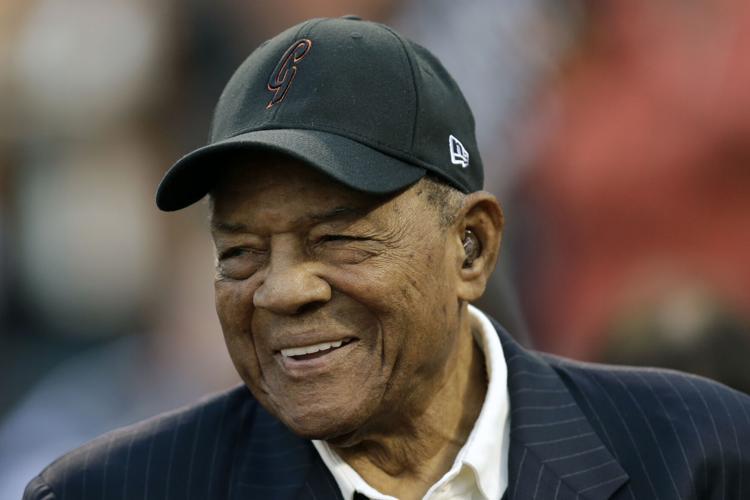
Before being sent to the New York Mets in 1972, Mays had played for the team for a total of 21 seasons. With 14 home runs, he helped the Mets improve in the standings, even though he only played for the club for two seasons.
Who is Willie Mays
Willie Howard Mays Jr., sometimes known as “the Say Hey Kid,” was an American professional baseball center fielder who played for a total of 23 seasons in Major League Baseball (MLB). He was born on May 6, 1931, and passed away on June 18, 2024. On the majority of all-time lists, including those compiled by The Sporting News and ESPN, Mays is ranked second, behind only Babe Ruth, and is widely considered to be one of the best players in the history of the game. Beginning in 1951 and continuing until 1973, Mays was a member of the New York Mets and the New York Giants, both of which competed in the National League (NL).
In addition to being an all-around athlete, Mays was born in Westfield, Alabama. In 1948, he became a member of the Birmingham Black Barons, which became a member of the Negro American League. He continued to play for them until 1950 when he was hired by the Giants immediately after graduating from high school. In 1951, he made his debut in Major League Baseball with the Giants, and he went on to earn the Rookie of the Year Award when he hit 20 home runs, which contributed to the Giants winning their first pennant in fourteen years. The National League Most Valuable Player (MVP) Award was bestowed upon him in 1954, and he was the driving force behind the Giants’ last World Series victory before they relocated to the West Coast.
The over-the-shoulder grab that he made in the first game of the 1954 World Series is widely considered to be one of the most iconic plays in the history of baseball. Following the relocation of the Giants to San Francisco, Mays earned another Most Valuable Player award in 1965. He also led the Giants to the World Series in 1962, where they were defeated by the New York Yankees the next year. After being traded to the New York Mets in the middle of the season in 1972, he retired after the Mets won the 1973 World Series. This marked the end of his career, which he completed by returning to New York. The remainder of the decade was spent with him working as a coach for the Mets. After that, he returned to the Giants and took a position as a special assistant to the president and general manager.
Willie Mays Death
Mays died of heart failure on June 18, 2024, at a Palo Alto, California, care facility. He was 93. The day prior, he issued his last public comment, stating that he elected to remain in California rather than attend the MLB @ Rickwood Field game between the Giants and Cardinals later that week on June 20.
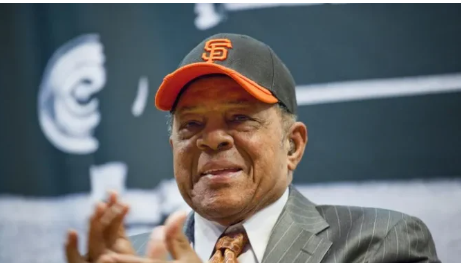
Rob Manfred, baseball’s commissioner, issued the following statement after the San Francisco Giants reported Mays’ death:
All of Major League Baseball is in sorrow today, as we assemble at the field where a career and legacy unlike any other started. Willie Mays transferred his all-around skill from the Birmingham Black Barons of the Negro American League to the storied Giants team. Willie inspired generations of players and spectators from coast to coast, including New York and San Francisco, as the game flourished and fully earned its position as America’s National Pastime.
President Joe Biden, former President Barack Obama, San Francisco Mayor London Breed, California Governor Gavin Newsom, and sports luminaries Magic Johnson and Barry Bonds all paid homage to Mays.
Willie Mays Net Worth
Willie Mays, often known as The Say Hey Kid, is a former professional baseball player who had an estimated net worth of $3 million in 2012.