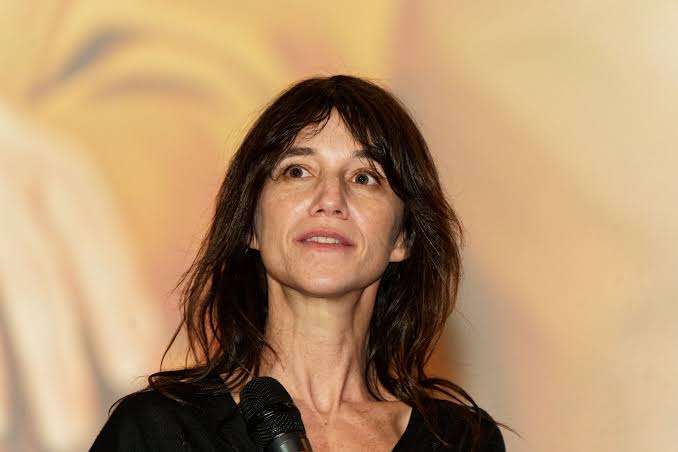

Charlotte Gainsbourg Discovers Jane Birkin’s Role in France’s Abortion Rights Protests
She was making the film Women on Trial, about the real-life trial of a child prosecuted for having an abortion, when someone sent Charlotte Gainsbourg a photograph of her mother at one of the pro-choice demonstrations that erupted in France at the time. Seeing her mother, the actor Jane Birkin, in 1972, “looking beautiful and in the middle of a demonstration”, was “very moving”, Gainsbourg recalls.
At that time, in a court in Bobigny, a Paris suburb, the prominent lawyer Gisèle Halimi was defending 16-year-old Marie-Claire Chevalier, as well as her mother and two other women who helped her have an abortion, then illegal in France. Gainsbourg says the Bobigny trial was new to her as she plays Halimi, a leading figure in French feminism and activism who died in 2020. “I had no idea. For me, abortion rights started with Simone Veil” – the French minister of health who saw through decriminalisation three years later – “so I had to catch up.”
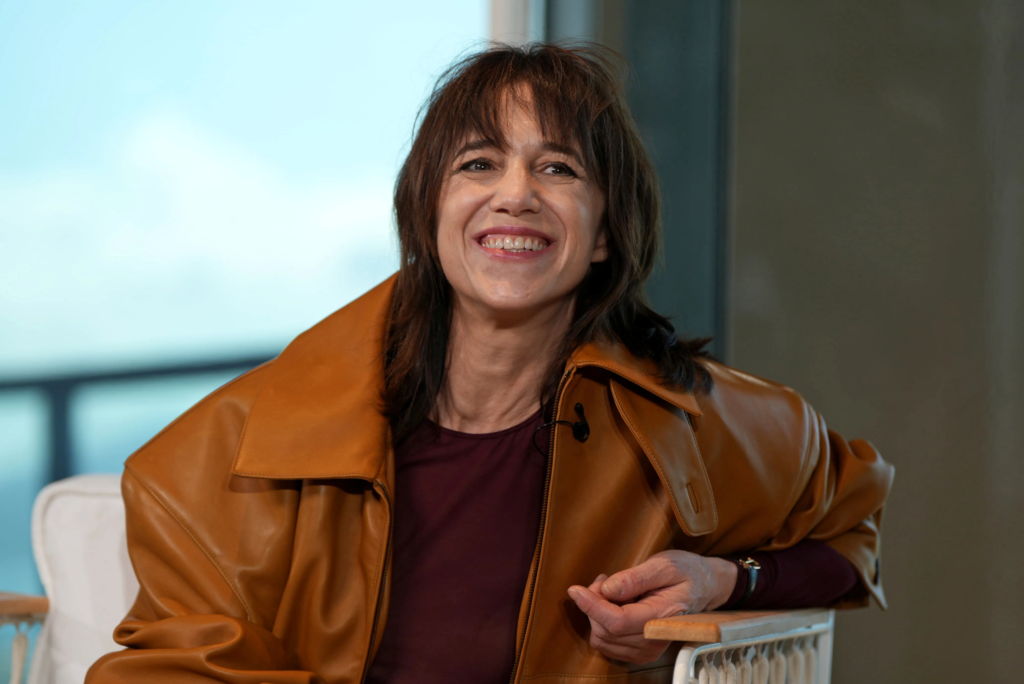
Charlotte Reveals Struggles Growing Up Alongside Beautiful Mother Jane Birkin
Marie-Claire had become pregnant after being raped and had an illegal abortion with the help of her mother. Gainsbourg said, “The fact that it’s the rapist that reports her to the police is just so wild.” The idea behind Halimi was to stir up protest and also to challenge the very law that criminalised abortion. It found supporters among major feminists like Simone de Beauvoir, besides demonstrations which Birkin attended.
We spoke at a London hotel. Gainsbourg’s bull terrier was at her feet and kept getting up to investigate me – the owner said, “Daphne, non!” – before she eventually settled. Gainsbourg lives in London now with her partner, Yvan Attal, who is an actor and director, and the two youngest of their three children. “I find it strange; I never felt that it was home, and yet I was born here.” Gainsbourg is quoted as saying (she says it now really feels like home). She grew up in France, famously the daughter of Birkin and, of course, Serge Gainsbourg.
If it was sometimes hard to be the daughter of Serge, that legendary provocateur – they recorded a song, Lemon Incest, with an accompanying creepy video when she was 12, which she is still defending – I think one must have a rough time with such a stunning mother. Gainsbourg smiles and says, “It was very difficult.” “Not only my mother, but my grandmother – my mother always said she felt ugly in comparison to her mother [the actor Judy Campbell]. “The whole aesthetics in my family were so high that I felt so ugly, and for really …” She gets into a pause. “Until now. It’s just that I don’t care that much. But as an adolescent, oh my God, it was terrible.” “Gainsbourg, age 55, is very beautiful, not to mention unreasonably cool (she is also a musician),” says the writer, but Gainsbourg points out, “But not in this family.” She laughs. “It just has to not matter.”
Charlotte Gainsbourg Sounds Alarm Over Extremism and Women’s Rights
There’s always something more important, but it’s still relevant. Even though Women on Trial is set back in 1972, people today find it interesting. Halimi is very compelling in court, where she makes the statement “shame must change sides” – this is the line that was used by a legal representative for Gisèle Pelicot during the 2024 trial of her ex-husband and 50 other men, whom eventually would be found guilty for the charges of rape and sexual assault. That saying seems to transcend time and continues to ring true even after half a century. More than 50 years later, shame still stalks women.
Apart from these social issues, one of the most crucial rights for women, reproductive rights, is also being threatened. “You sense how it’s something quite fragile,” says Gainsbourg. She wasn’t motivated to make the film by those thoughts either. “But now that the film is done, it’s wonderful if people are aware of the danger again. There’s a strange moral …” She pauses. She feels something is coming that she herself finds very dangerous. “Could ‘it’ stand for a comeback of far-right forces (France is currently looking at a very real potential of a Marine Le Pen presidency next year)?” “Absolutely. I mean, everywhere, it’s very scary.” She then goes on to clarify that she is equally concerned about the possibility of a far-left comeback. She ends with that statement: “I find every extreme quite terrifying.”
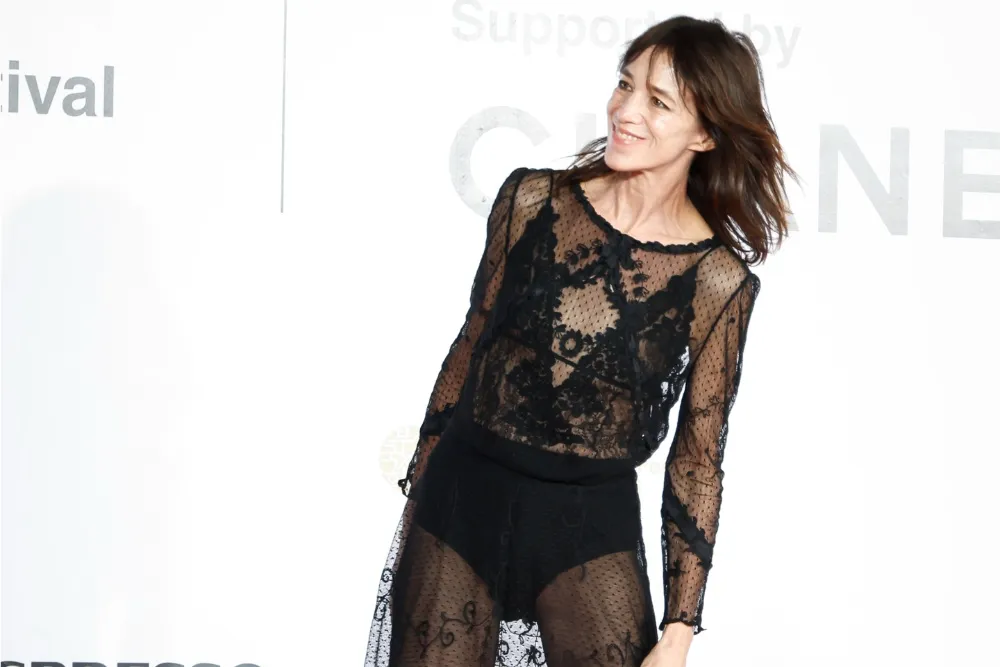
Charlotte Gainsbourg Faces Backlash Over Controversial Gisèle Halimi Role
It is quite controversial for Gainsbourg to be the one who plays Halimi. In 2025, along with 200 other names, she was among the signatories of an open letter published by Le Monde. It pointed out the huge increase in antisemitic attacks, and they asked that the government should also take notice and recognise anti-Zionism as a new manifestation of antisemitism. Later that year, Gainsbourg and Attal were part of 20 people who signed an open letter that called for the president of France, Emmanuel Macron, not to acknowledge a Palestinian state at the UN General Assembly, which he was preparing to do, before the release of Israeli hostages and destruction of Hamas.
One of Halimi’s sons was upset with the casting and stated his late mother was a supporter of Palestinian rights who had been a long-standing supporter of that cause; his comment led to a petition that collected signatures of 13,000 people. Besides, the feminist organisation ‘Choisir’, initiated by Halimi, declared its dissociation from the film. Gainsbourg doesn’t feel like discussing the public critiques. She looks upset when talking about the very public criticism, and, according to her, she was “protected in a way”, because the supporters stood behind her. But on the other hand, it was “violent”.
If current culture doesn’t have the power to disconnect an artist from their work, Gainsbourg doesn’t seem to have a problem with it. As a musician, she has expressed admiration for Kanye West’s work. The greatest of her screen collaborations, on the other hand, is with Lars von Trier, one of film’s most controversial directors. The same public disavowal that these two men had to make was that they said, “I am not a Nazi”; it was necessary on the part of the West for a catalogue of antisemitism, including the song called Heil Hitler, and on the part of Von Trier, who was jokingly showing admiration for Hitler, as a consequence of him being banned from Cannes.
Charlotte Defends Artistic Provocation and Her Work With Lars von Trier
‘We’d been discussing quite broadly how she is attracted to provocateurs, her father being one of them,’ she says while smiling. ‘If he were still alive, he would have been cancelled long ago. Are we sometimes too eager to judge artists for their politics, or for things they have done that offended people? “I mean, being an artist doesn’t necessarily mean you have to be provocative, but provocation can be a good tool. I have no idea what the world will be like if every form of provocation is censored. Personally, I think I would find it quite boring.” She says it’s a very difficult situation and that every single case should be considered on its own. “To make a general statement is extremely difficult. But it makes artists, on the whole, quite scared.”
Gainsbourg has made three films with Von Trier, and she recalls her career as “before and after Lars”. Working with him, she says, has “been such a revelation. When I did Antichrist [a horror film in which she portrays a grieving mother], it was the first time that somebody was pushing me in every direction, but it was so invigorating. It was a very extreme film.” Making their second film, the end-of-the-world Melancholia, caught her off guard. She thought that she and Von Trier were friends, but he kept his distance throughout the film, leaving her feeling insecure and full of self-doubt. That was, in fact, a tactic he employed to elicit her performance; she learnt that later. “If it is a torture that you are not willing to go through, then we are all free to leave,” she mentions when I enquire if that might be unethical. “Maybe what I have in me is a little bit of masochism, and that is why I was able to get a lot of pleasure from every piece of it.” In the end, she says she put her faith in him. “I see that it is understandable that people do not want to suffer. In my opinion, suffering was part of what I liked in the work.”
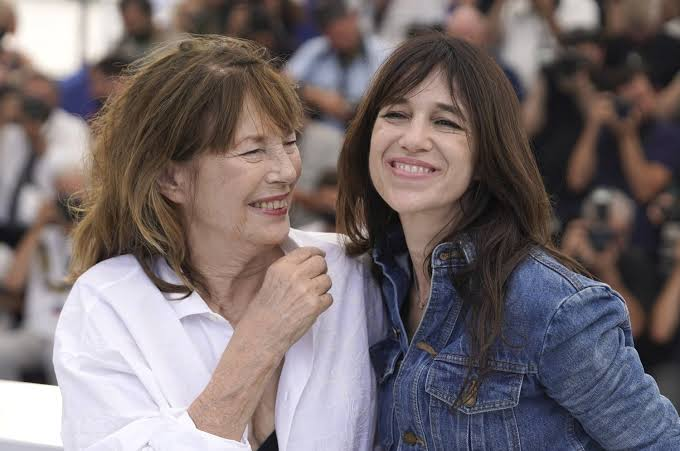
Charlotte Gainsbourg Gives Rare Update on Lars von Trier and Her Future Projects
She said she was in contact with Von Trier, who has said he was diagnosed with Parkinson’s disease in 2022, though she preferred to “stay very discreet”. Asked whether she’d appear in his next film, which is said to be a feature called After, which Von Trier is funding, she said, “We’ll see.” She did not offer any further details. Her latest project, she said, is an album of music to be released next year. She is also to shoot a film with her co-star from her latest film, Only What We Carry, which was screened at this year’s Tribeca Film Festival in the US. Actor Quentin Tarantino also starred in that film. Talking about her experience of working with him, she said, “He was just playing the game, and it was a wonderful experience.” She said her new film with Only What We Carry director Jamie Adams would see her improvise again. “I love to do things with the same people,” she said. Ms Sandoval has spoken about her shyness before, claiming she’s had the trait since childhood and said having children had “helped me overcome [it]”. “I could use them to just not care about the rest,” she said. “As you get older, you see what your priorities are.”
She has asked her if she learned anything while playing such strong characters such as Giselle Halimi, who are like little jewels to enhance her own personality, but she replies, “Actually, I was intimidated by her force, by someone who had achieved so much. But at the same time, I knew why they asked me to play her. It was also to have a vulnerability that she might not have shown so much.”